Walk into almost any modern office, airport terminal, or shopping mall today, and you’ll notice something that would have seemed unusual just two decades ago: glass that isn’t fully transparent. Soft, frosted panels divide meeting rooms. Etched patterns wrap around reception desks. Textured partitions let light through while keeping prying eyes out. This is sandblasted glass — and it has quietly become one of the most influential materials in contemporary interior design.
What was once a niche decorative technique used mostly for bathroom windows and the occasional shopfront sign has evolved into a design language of its own, shaping how architects and designers think about privacy, light, branding, and space. Here’s a closer look at what sandblasted glass is, why it has become so popular, and how it’s reshaping the built environment around us.
What Exactly Is Sandblasted Glass?
Sandblasted glass is created by propelling a stream of abrasive material — traditionally sand, though today more often aluminum oxide or silicon carbide — at high velocity against a glass surface. The abrasive erodes the surface at a microscopic level, leaving behind a matte, frosted texture instead of the smooth, glossy finish of standard glass.
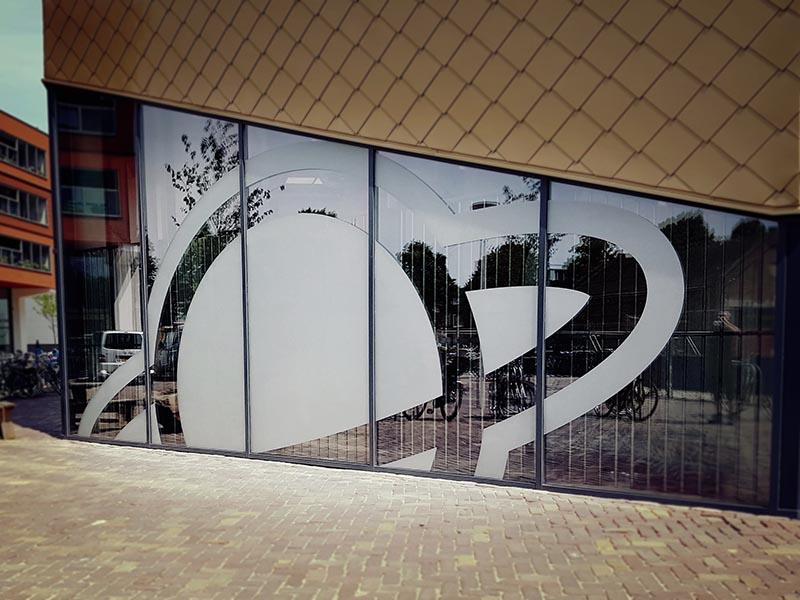
The process gives fabricators remarkable control. By using stencils, masking film, or computer-guided nozzles, they can etch anything from a uniform frosted finish to intricate logos, patterns, gradients, and lettering. The result is glass that diffuses light beautifully while offering varying degrees of privacy and visual interest, all without sacrificing the sense of openness that glass provides.
Why Sandblasted Glass Has Become the Design World’s Favorite Tool
1. It Solves the Privacy-vs-Openness Dilemma
Modern architecture loves glass. It brings in natural light, creates a sense of spaciousness, and photographs beautifully. But full transparency isn’t always practical — nobody wants their conference room visible to the entire office, and airport lounges need some visual separation from bustling terminals. Sandblasted glass offers a middle ground: it maintains the luminous, open feeling of glass architecture while blurring sightlines just enough to create privacy where it’s needed.
2. It Turns Functional Elements Into Branding Opportunities
One of the most significant shifts sandblasted glass has enabled is the ability to embed branding directly into architecture. Company logos etched into lobby partitions, wayfinding icons frosted onto airport signage, or a retailer’s pattern etched across a storefront window all serve double duty — they’re structural or functional elements that simultaneously reinforce identity. This is a big reason interior designers and corporate clients have embraced the material so enthusiastically.
3. It’s Cost-Effective Compared to Alternatives
Compared to laminated decorative films, colored glass, or custom millwork partitions, sandblasted glass is often more economical over the long run. It doesn’t peel, fade, or require replacement the way adhesive films sometimes do, and it can be produced at scale for large commercial projects without ballooning costs.
4. Low Maintenance, High Durability
Because the frosted texture is etched into the glass itself rather than applied as a coating or film, sandblasted glass tends to hold up well over years of heavy use. It resists scratching better than film-based alternatives, doesn’t discolor with UV exposure, and is simple to clean — a major consideration for high-traffic commercial environments.
Transforming the Modern Office
Nowhere has sandblasted glass had a bigger design impact than in the contemporary workplace. As open-plan offices became the norm, companies quickly ran into a familiar problem: too much openness kills focus and privacy, but solid walls kill the collaborative, light-filled atmosphere everyone wants.
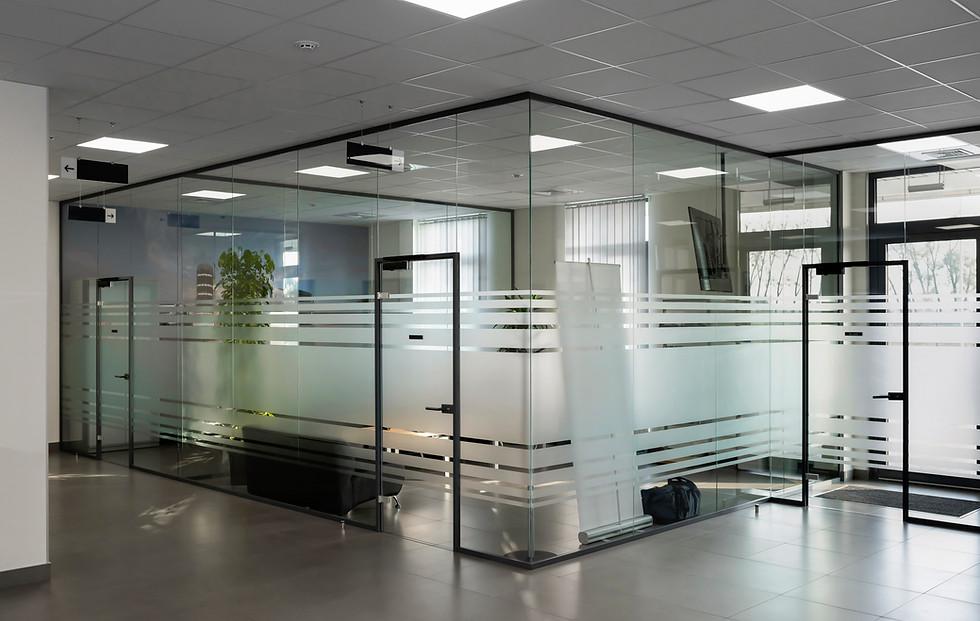
Sandblasted glass partitions have become the go-to compromise. A few common applications include:
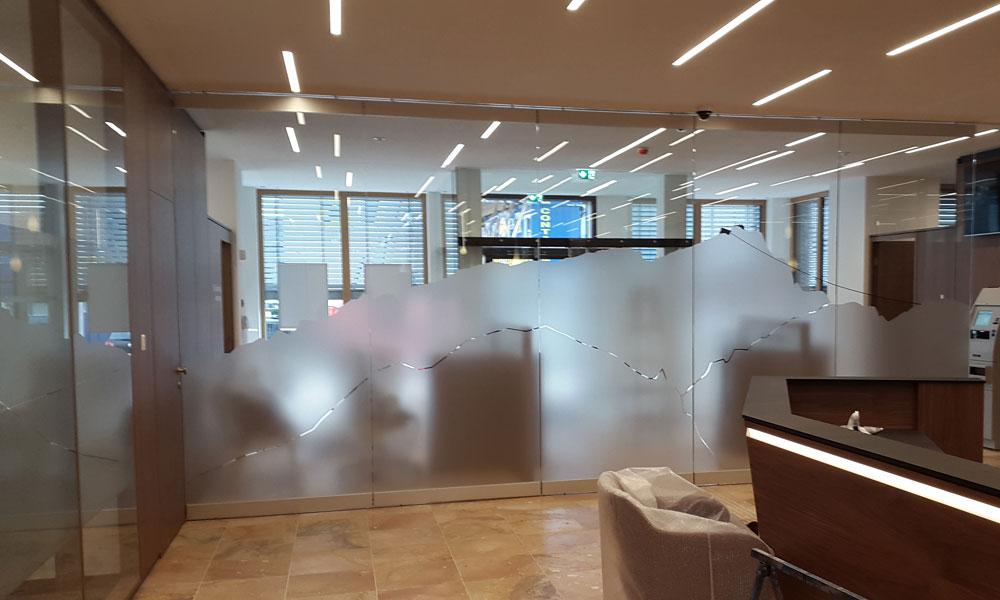
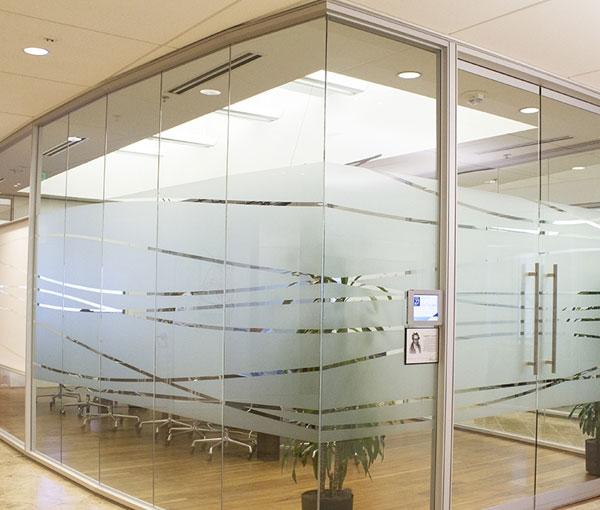
- Meeting room walls with frosted bands or full frosted panels that allow light to pass through while obscuring the room’s occupants from the general floor.
- Executive offices using sandblasted glass instead of solid walls, preserving natural light flow across the floor plan while giving leadership a visual boundary.
- Etched logos and mission statements on glass partitions near entrances, turning functional walls into branding statements.
- Frosted privacy strips at desk height in open-plan bullpens, giving employees a subtle sense of personal space without boxing them in.
The effect is subtle but powerful: offices feel airy and modern, yet they don’t sacrifice the psychological comfort of having boundaries.
Elevating Commercial and Retail Spaces
In retail environments, sandblasted glass has become a favorite for storefronts, display cases, and fitting rooms. Retailers use etched patterns to create eye-catching window displays that filter street-level views without fully blocking them, drawing customers in with texture and light play rather than a plain pane of glass.
Restaurants and hospitality venues use sandblasted glass dividers between dining sections to create a sense of intimacy without fully separating guests from the room’s energy. High-end boutiques often use custom-etched motifs on changing room doors and display shelving, adding a tactile, premium feel that plain glass simply can’t match.
Reshaping Airports and Large Public Interiors
Airports present a unique design challenge: they need to move thousands of people efficiently while still feeling calm, organized, and premium. Sandblasted glass has become a key tool in achieving that balance.
- Gate area partitions use frosted glass to separate lounges and boarding areas from general walkways, reducing visual clutter without making spaces feel closed off.
- Wayfinding and signage frequently incorporates sandblasted lettering and icons directly into glass panels, giving airports a cohesive, upscale aesthetic instead of relying purely on printed signs.
- Security and privacy screens, such as around immigration counters or VIP lounges, use frosted glass to maintain a sense of transparency and calm while still limiting sightlines.
- Acoustic and visual buffering near escalators, elevators, and staircases often relies on sandblasted panels to soften hard architectural edges.
Bringing Texture and Light to Shopping Malls
Shopping malls have similarly leaned into sandblasted glass as both a functional and aesthetic tool. Elevator enclosures, escalator side panels, and railing infill panels frequently use frosted or custom-etched glass to soften the visual weight of large open atriums. Mall directories and digital kiosks are often framed or backed by sandblasted glass panels, giving them a polished, integrated look rather than appearing as bolted-on additions.
Skylights and atrium ceilings sometimes incorporate sandblasted glass to diffuse harsh overhead sunlight, spreading it evenly across the shopping floor and reducing glare — a subtle but meaningful improvement to the shopper’s overall comfort.
Healthcare, Education, and Beyond
The influence of sandblasted glass extends well past offices and airports. Hospitals use it in patient room doors and nurse station partitions to balance patient privacy with the need for staff visibility. Universities use it in library study rooms and administrative offices for the same reason offices do — light without total exposure. Even residential architecture has picked up the trend, with sandblasted glass appearing in staircases, bathroom windows, and interior room dividers in upscale homes.
Why This Trend Isn’t Slowing Down
A few forces are pushing sandblasted glass further into the mainstream:
- Wellness-focused design — Architects increasingly prioritize natural light for occupant wellbeing, and sandblasted glass allows light-filled spaces without compromising privacy.
- Sustainability — Because it doesn’t require chemical coatings or adhesive films that eventually need replacing, sandblasted glass fits well into long-lifecycle, low-waste building strategies.
- Customization technology — Advances in CNC-guided sandblasting and precision masking mean fabricators can now etch incredibly detailed, brand-specific patterns cost-effectively, even for large-scale commercial orders.
- Rising demand for flexible, multi-use spaces — As offices and commercial spaces get reconfigured more frequently, glass partitions (sandblasted or otherwise) offer more flexibility than permanent drywall.
Final Thoughts
Sandblasted glass has moved far beyond its origins as a simple privacy solution for bathroom windows. Today, it’s a defining feature of how architects and designers solve one of modern architecture’s core tensions: how to create spaces that feel open and light-filled, yet still offer the privacy, branding, and acoustic comfort that people need. From corporate boardrooms to airport terminals, from shopping mall atriums to hospital corridors, sandblasted glass has proven itself to be far more than decoration — it’s a functional design tool that’s reshaping how we experience shared spaces.
As fabrication technology continues to improve and sustainability becomes a bigger priority in commercial construction, expect sandblasted glass to show up in even more places — not as an afterthought, but as a deliberate, integral part of how buildings are designed from the ground up.