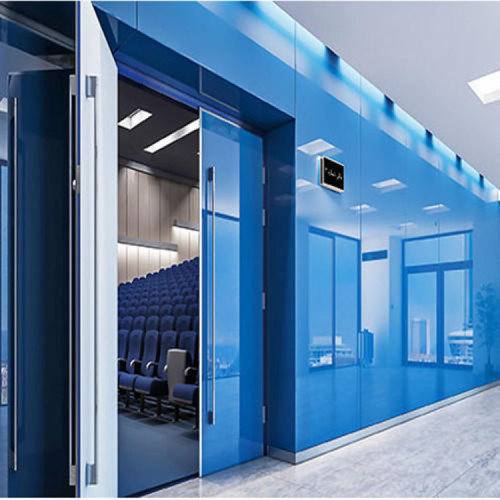
Walk into any recently renovated kitchen, office lobby, or boutique retail space and there’s a good chance you’ll spot it: a wall of glass in a saturated, monochrome color, catching the light with none of the grout lines, seams, or texture of traditional materials. That’s backpainted glass — and it has quietly become one of the most requested interior finishes among architects, designers, and homeowners alike.
At Bear Glass, we’ve seen demand for backpainted glass grow steadily across kitchens, commercial interiors, and feature walls throughout New York and New Jersey. This post breaks down what backpainted glass actually is, how it’s made, why it’s outperforming older materials in modern design, and what to consider before specifying it for a project.
What Is Backpainted Glass?
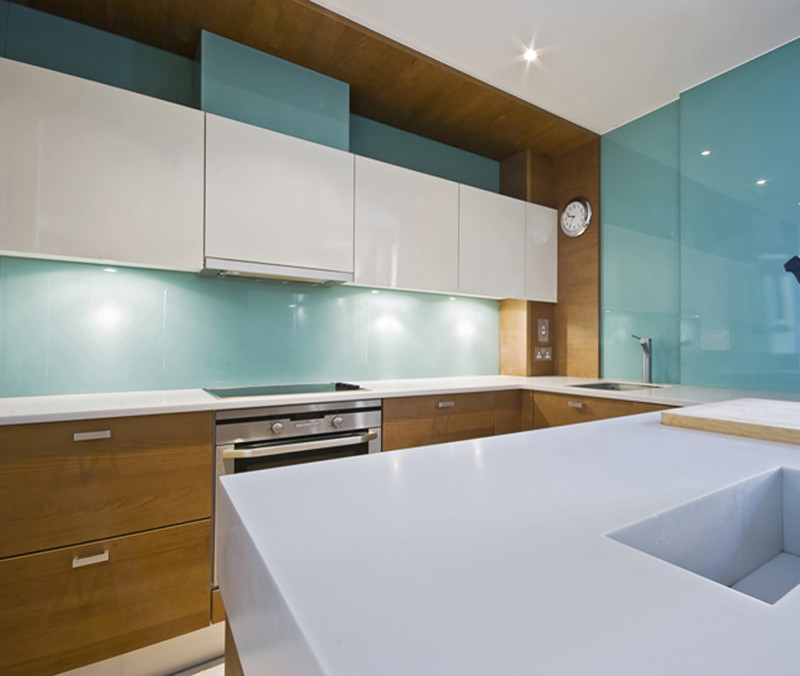
Backpainted glass — also called lacquered glass or painted-back glass — is glass that has an opaque, colored coating applied to one side, typically the back. The result is viewed through the unpainted face, which gives the color a distinctive depth and gloss that surface-applied paint on drywall or laminate simply cannot replicate.
The coating is usually a ceramic frit, ceramic-based paint, or a specially formulated lacquer that’s baked, cured, or tempered onto the glass surface. This bonding process is what separates true backpainted glass from a painted or vinyl-wrapped panel — the finish becomes part of the glass itself rather than a surface application that can peel, chip, or fade.
Why It’s Trending Right Now
1. A Seamless, High-End Look
Unlike tile or stone, backpainted glass installs in large, continuous panels with minimal seams. There’s no grout to stain, no repeating pattern, and no visible joints breaking up the surface. For designers chasing the minimalist, monolithic aesthetic that dominates current interior trends, this is a major draw.
2. Practically Unlimited Color Options
Because the color comes from a custom-mixed coating rather than a manufacturer’s fixed tile line, backpainted glass can be matched to almost any color — including exact Pantone or RAL codes, or a client’s existing brand palette. This makes it especially popular for commercial and hospitality projects where color consistency with branding matters.
3. Hygienic and Low-Maintenance
Glass is non-porous, which means it doesn’t harbor bacteria, absorb odors, or stain the way grout and some stones do. A quick wipe-down with glass cleaner is typically all it takes to maintain it — a meaningful advantage in kitchens, healthcare interiors, and food-service environments where hygiene is a specification requirement, not just a preference.
4. Durability That Holds Up
Backpainted glass used in interior applications is almost always tempered for safety, which also makes it significantly more resistant to scratching and impact than laminate or painted surfaces. It won’t fade the way some paints do under UV exposure, and it resists heat well enough to be installed directly behind cooktops as a backsplash.
5. It Reflects and Amplifies Light
The glossy surface of backpainted glass reflects ambient light, which can make smaller rooms — like galley kitchens or narrow office corridors — feel brighter and more open. Designers often specify it deliberately for this effect in spaces with limited natural light.
How Backpainted Glass Is Made
Understanding the manufacturing process helps explain why quality varies so much between suppliers.
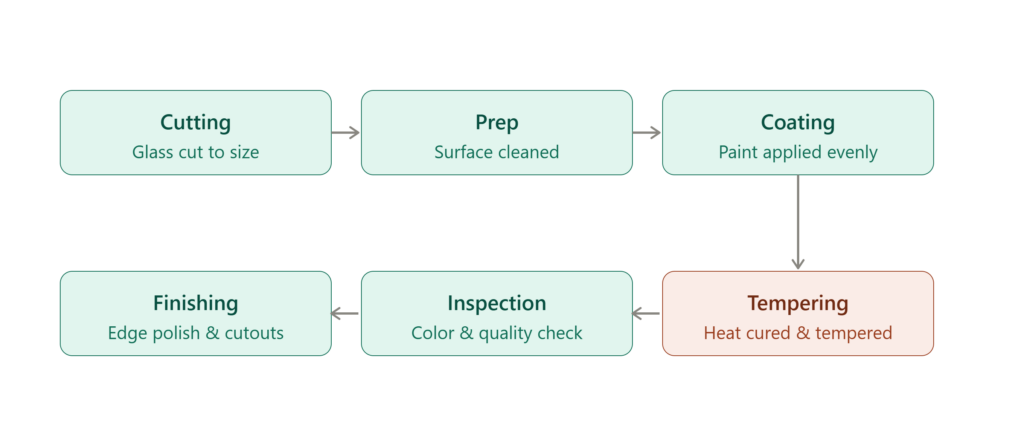
- Glass Selection & Cutting — Clear or low-iron (ultra-clear) glass is cut to size. Low-iron glass is preferred for brighter, true-to-color results since it lacks the greenish tint of standard float glass.
- Surface Preparation — The back surface is thoroughly cleaned to remove any residue that could cause the coating to bubble or peel later.
- Coating Application — A ceramic-based paint or frit is applied evenly, often using spray or roller-coating equipment for consistency across large panels.
- Curing / Tempering — The coated glass is heated in a tempering furnace. This step does two jobs at once: it fuses the coating permanently to the glass surface and strengthens the glass so it breaks into small, blunt fragments rather than sharp shards if it ever fails — a critical safety code requirement for interior applications.
- Quality Inspection — Panels are checked for color uniformity, coating adhesion, and optical clarity before cutting for edge finishing.
- Edge Finishing & Fabrication — Edges are polished or seamed, and holes or cutouts for outlets, hardware, or fixtures are added as needed.
Panels that skip proper tempering or use lower-grade coatings are more prone to peeling, uneven color, or breakage that doesn’t meet safety glazing standards — which is why sourcing from an experienced fabricator matters as much as the aesthetic choice itself.
Where Backpainted Glass Is Being Used
Kitchens
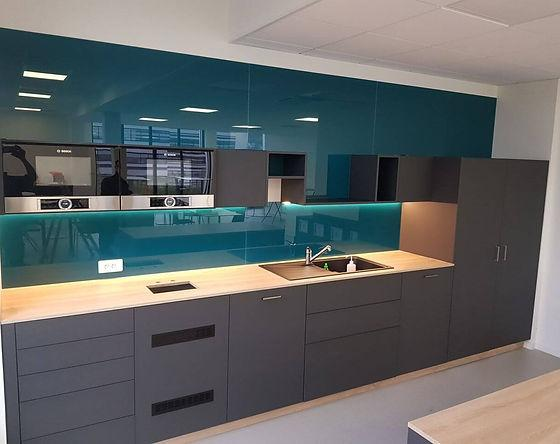
Backsplashes are the single most common application. Backpainted glass handles heat, grease, and moisture better than painted drywall and installs without the maintenance burden of grout.
Office & Commercial Interiors
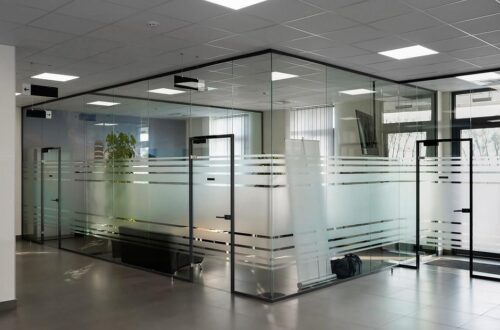
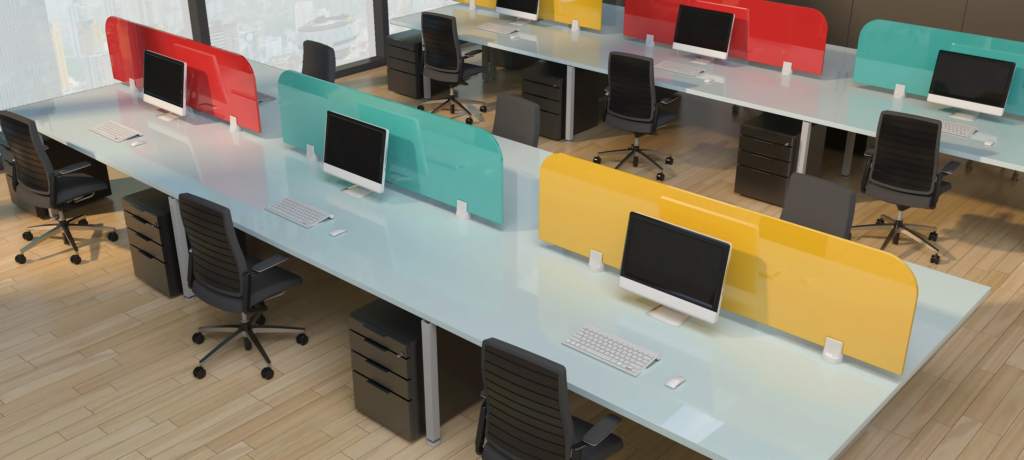
Partition walls, reception desks, and conference room walls increasingly use backpainted glass for a polished, brand-forward look. It’s also popular paired with switchable privacy film for meeting rooms that need to shift between transparent and opaque.
Feature Walls & Accent Panels
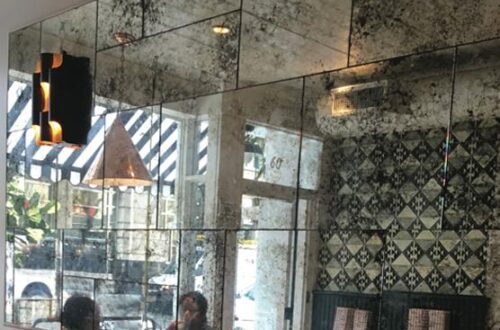
Residential and hospitality designers use large backpainted panels as statement walls — often paired with integrated lighting or paired with mirror or textured glass sections for visual contrast.
Cabinetry & Furniture
Cabinet doors, wardrobe fronts, and furniture panels finished in backpainted glass offer a high-gloss, lacquer-like look without the maintenance issues of actual lacquered wood, which can chip or show fingerprints more readily.
Bathrooms & Wet Areas
Because it’s non-porous and moisture-resistant, backpainted glass is a strong alternative to tile in shower surrounds and vanity backsplashes.
Backpainted Glass vs. Other Materials
| Material | Seamless Look | Maintenance | Color Flexibility | Heat Resistance |
|---|---|---|---|---|
| Backpainted Glass | Excellent | Low | Nearly unlimited | High |
| Ceramic Tile | Poor (grout lines) | Moderate | Limited to stock lines | High |
| Laminate | Moderate | Moderate | Moderate | Low–Moderate |
| Painted Drywall | Poor (texture, seams) | High | High | Low |
| Natural Stone | Good | High (sealing required) | Limited, natural variation | High |
Things to Consider Before Specifying Backpainted Glass
- Color matching takes lead time. Custom color mixing and sampling should be built into the project timeline, especially for exact brand-color matches.
- Panel size affects installation complexity. Very large panels require careful handling, proper substrate preparation, and experienced installers to avoid stress cracking.
- Lighting changes perceived color. The same coated glass can look noticeably different under warm versus cool lighting, so it’s worth reviewing samples under the space’s actual lighting conditions.
- Edge and cutout work should be planned in advance. Outlet cutouts, hardware holes, and edge polishing are far easier and more precise when specified before tempering rather than attempted after.
Why It’s Here to Stay
Backpainted glass isn’t a passing trend — it solves real problems that older interior materials struggle with: seamless large-format coverage, near-limitless color matching, low maintenance, and durability that holds up over years of daily use. As tempering and coating technology has matured, the finish has moved from a niche architectural product to a mainstream option that’s now genuinely competitive on cost with high-end tile and stone.
For architects and designers looking for a finish that reads as custom and high-end without the long-term upkeep of natural materials, backpainted glass has earned its place as a first-choice interior surface.
Need backpainted glass fabricated for an upcoming project? Bear Glass works with architects, designers, and contractors across New York and New Jersey to fabricate custom backpainted glass panels — from color matching through tempering, edge finishing, and delivery. Contact our team to discuss specifications and lead times for your next project.