
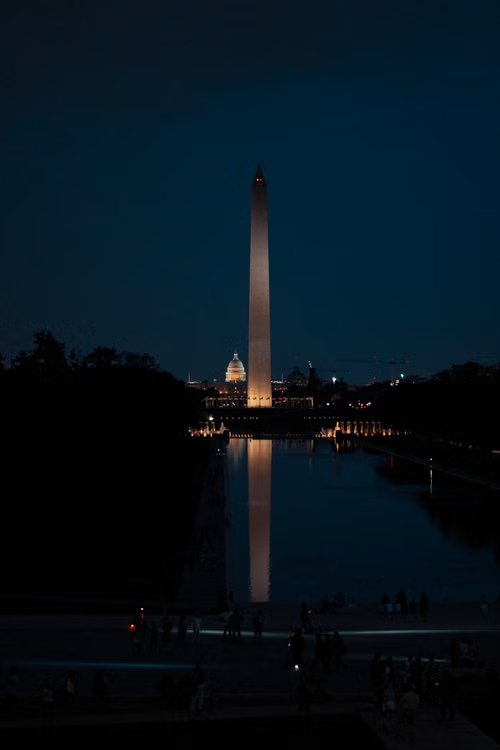
Few landmarks in the United States carry the visual weight of the Reflecting Pool on the National Mall. Stretching nearly 2,000 feet between the Lincoln Memorial and the World War II Memorial, its still water doubles the height of the Washington Monument and mirrors the sky above it, turning a simple architectural feature into one of the most photographed vantage points in the country.
It’s also, at its core, an exercise in reflection and transparency — which raises an interesting question for anyone in the glass and architectural design world: what would it look like if specialty glass were introduced into that space? Not replacing the pool itself, but framing it — walkways, railings, viewing platforms, and shade structures designed to work with the water’s mirror effect rather than against it.
As a glass fabricator that works on high-visibility commercial and architectural projects throughout New York and New Jersey, we couldn’t resist thinking through how this would actually work — and more importantly, which types of glass would hold up to a site that welcomes millions of visitors a year.
The Concept: A Glass Promenade Around a Water Mirror
The Reflecting Pool already functions as a giant mirror. Introducing glass elements around its perimeter would create a layered visual experience — sky and monument reflected in the water below, and reflected again in glass surfaces at eye level or underfoot.
A few realistic applications:
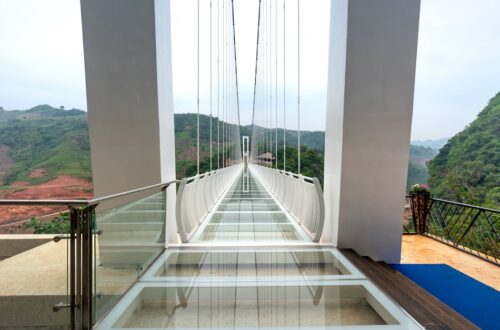
- Cantilevered glass viewing platforms extending slightly over the pool’s edge, allowing visitors to look straight down through a transparent floor to the water — similar in concept to the glass Skywalk at the Grand Canyon or observation decks on tall structures like the CN Tower.
- Glass balustrades in place of stone curbing, keeping the reflective sightline from the walking path uninterrupted rather than broken up by opaque stone edges.
- Glass canopy structures at nearby rest areas, providing shade without blocking the monument sightlines that make this stretch of the Mall so iconic.
It’s a compelling concept on paper. But a monument-adjacent, high-traffic, waterside public space is one of the most demanding real-world environments for glass — which is exactly why material selection would make or break a project like this.
The Glass That Would Actually Work Here
1. Low-Iron (Ultra-Clear) Glass
Standard float glass carries a faint green tint from natural iron content — barely noticeable in a window, but glaringly obvious when the entire purpose of the installation is a pure, undistorted reflection next to white marble monuments. Low-iron glass removes that tint, delivering the crisp, true-color clarity the site would demand.
2. Laminated Safety Glass
For any walking surface, railing, or platform near a monument that draws millions of visitors annually, laminated glass isn’t optional — it’s the baseline. Built from multiple glass layers bonded with an interlayer, it holds together even if a pane cracks under impact or extreme weather, rather than shattering into a hazard. This is standard practice for elevated glass walkways and public-facing installations, and it would be essential here.
3. Textured or Fritted Glass for Flooring
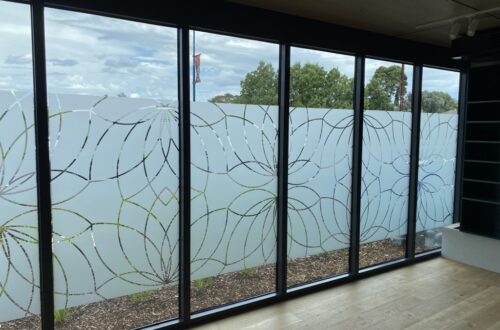
Completely smooth glass near open water is a slip hazard — rain, humidity, and condensation would make any glass walking surface dangerous without treatment. A subtle ceramic frit pattern or acid-etched texture adds slip resistance while preserving most of the transparency that makes the design work.
4. Low-E Coated Glass for Shade Structures
Glare management would be a serious design challenge here — sunlight bouncing off both the pool’s water surface and untreated glass simultaneously could create real discomfort, even hazardous glare, on a bright DC summer afternoon. Low-emissivity coatings help control solar heat gain and reflected glare while still allowing canopy structures to stay visually light and transparent.
5. Self-Cleaning Coated Glass
Waterside installations attract mineral deposits, bird activity, and constant foot traffic. A hydrophilic self-cleaning coating uses rainwater and UV exposure to break down grime and rinse it away, dramatically cutting maintenance demands compared to untreated glass in a humid, high-traffic environment like the National Mall.

The Honest Trade-Off
As striking as full glass coverage might look in a rendering, it would fight against the very purpose of the site in practice. Glare management, humidity-driven maintenance, and glass reflections competing visually with the pool itself for attention are all real design tensions. In reality, a project like this would likely favor minimal, purposeful glass accents — a few viewing platforms, transparent railings, or shade canopies — over full-surface glass coverage, letting the water remain the star of the space.
What This Means for Real-World Projects
Few of us are designing installations for national landmarks, but the same principles apply directly to commercial buildings, waterfront properties, storefronts, and public spaces throughout New York and New Jersey. Any project involving glass near water, heavy foot traffic, or high sun exposure needs the same careful material selection: low-iron glass for true clarity, laminated glass for public safety, textured glass for slip resistance, Low-E coatings for glare and heat control, and self-cleaning treatments for long-term maintenance.
Whether you’re designing a waterfront storefront, a commercial entryway, or an architectural feature meant to catch the eye, the right glass specification is what separates a stunning rendering from a durable, functional installation.
Talk to Bear Glass About Your Next Architectural Glass Project
Bear Glass has been fabricating and installing custom architectural glass for commercial and residential projects throughout the New York and New Jersey area, with offices in Queens Village, NY and Tinton Falls, NJ. From laminated safety glass to Low-E coated and self-cleaning glass systems, our team can help you specify the right glass for even the most demanding, high-visibility environments.
Have a project in mind? Contact Bear Glass today for a consultation.