Architecture & Interior Design · Flooring Guide
The Future Is Underfoot: Why Glass Floors Are Replacing Concrete & Wood
A deep dive into how laminated acid-etched glass floors by Bear Glass Inc. are redefining modern spaces — and why traditional floors are being left behind.
Bear Glass Inc. — New York, USA · 10 min read · Architecture & Design
“Every great building starts from the ground up — and the most visionary architects know that the floor isn’t just where you walk, it’s where your design makes its first statement.”
— The Flooring Debate
Concrete, Wood, or Glass: Which Floor Defines the Future?
For decades, the world of flooring has been dominated by two titans: traditional concrete and hardwood or engineered wood. These materials have shaped the interiors of homes, offices, commercial spaces, and public buildings across the globe. They are trusted, well-understood, and comfortably familiar. But as architecture pushes into more expressive, light-forward territory, a third contender has stepped onto the scene — and is rapidly stealing the spotlight.
Laminated acid-etched glass flooring represents a fundamental shift in how designers think about space, light, safety, and aesthetics. It is no longer a futuristic curiosity found only in high-end showrooms or museum installations. Today, it is a practical, customisable, and increasingly affordable choice for residential, commercial, and hospitality projects of all scales.
Leading this transformation in the United States is Bear Glass Inc. — a fourth-generation glazier based in Queens, New York, with a reputation built on precision craftsmanship and an extensive portfolio of glass solutions. The laminated acid-etched glass floors combine safety engineering with aesthetic sophistication in a way no other flooring material can match.
— Head-to-Head Comparison
Traditional Floors vs. Glass: The Full Picture
Before we can appreciate what makes glass floors so revolutionary, we need to understand the full strengths — and significant limitations — of the materials that have long defined our floors.
🏗️ Traditional Concrete
Durability: High — but cold, grey, monotonous
Aesthetics: Functional, industrial — limited appeal
Light transmission: None — blocks all natural light
Maintenance: Cracks over time; stains easily
Customisation: Minimal; costly to modify
⚠ Outdated for modern design
✦ Laminated Acid-Etched Glass
Durability: Exceptional — laminated for safety & resilience
Aesthetics: Stunning satin finish; customisable patterns
Light transmission: Softly diffuses light between levels
Maintenance: Easy — scratch-resistant, anti-fingerprint
Customisation: Fully bespoke: logos, patterns, opaque/satin
★ Recommended for modern spaces
🪵 Traditional Wood
Durability: Moderate — warps, scratches, fades
Aesthetics: Warm, natural — but ubiquitous
Light transmission: None — absorbs rather than reflects
Maintenance: Requires regular sanding & refinishing
Customisation: Limited to stain colours & grain patterns
⚠ Familiar but high-maintenance
The comparison reveals a stark reality: concrete and wood floors are passive surfaces — they cover the ground and that is largely all they do. Glass flooring, by contrast, is an active architectural element. It participates in the flow of light, expands the perception of space, and carries an unmistakable visual language of sophistication.
— The Case Against the Status Quo
Why Concrete and Wood Are Falling Short
The Concrete Problem
Concrete floors have long been a choice of necessity more than desire. Yes, concrete is tough — but it is also relentlessly cold underfoot, acoustically harsh, and visually monotonous without expensive treatments. It cracks under pressure and thermal cycling, absorbs moisture that encourages mould, and stains permanently without heavy sealants. In commercial settings, the maintenance burden is non-trivial. Perhaps most significantly, concrete absorbs and entombs light — in multi-storey buildings, it creates a stark separation between levels that shrinks every room it occupies.
Industrial chic has had its moment, but discerning clients and designers are increasingly looking for something that transcends utilitarian grey.
The Wood Dilemma
Hardwood floors carry a timeless warmth that is genuinely appealing. But warmth has its costs. Wood swells and contracts with humidity, it scratches under furniture and heel traffic, and it fades under sunlight exposure. Refinishing is an expensive, messy, and periodically necessary ordeal. Engineered wood is more stable but sacrifices authenticity. And neither hardwood nor engineered wood can transmit light, visually connect spaces, or be etched with custom patterns that communicate a brand or design identity.
More critically: in a world where sustainability matters, sourcing quality hardwood responsibly is increasingly difficult and costly. The environmental arithmetic is shifting decisively in favour of materials that last longer and require less intervention.
“The floor you walk on today should still look and perform like new decades from now — without refinishing, without replacement, without apology.”
Bear Glass Inc. — Design Philosophy
Bear Glass Inc. — Queens, New York, USA
Laminated Acid-Etched Glass Floors: Engineering Meets Artistry
Bear Glass Inc. has spent over two decades refining the craft of glass fabrication. Their laminated acid-etched glass floor panels represent the apex of that expertise — a product where structural safety and visual elegance are not competing values, but complementary ones.
- Laminated safety construction. Bear Glass recommends laminated glass for all floor applications. If one pane fails, the interlayer holds the panel together — there is no catastrophic collapse, no dangerous shards, no sudden void underfoot. This is the gold standard for structural glass used in floors and staircases.
- Acid-etched anti-slip surface. Bear Glass uses the Walker Textures® Traction system — an acid-etched surface treatment that provides reliable grip underfoot while maintaining a refined, satin aesthetic. Two etching options are available: opaque and satin, offering design flexibility for any project brief.
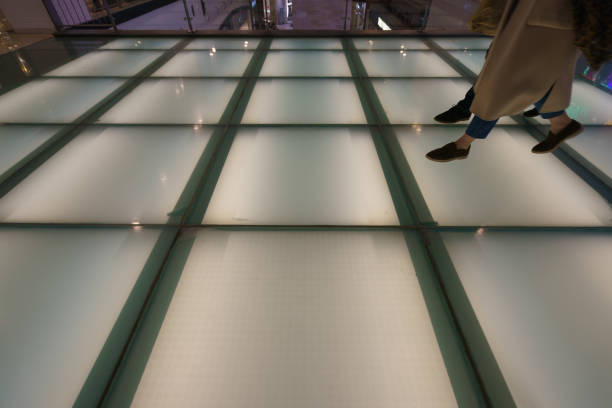
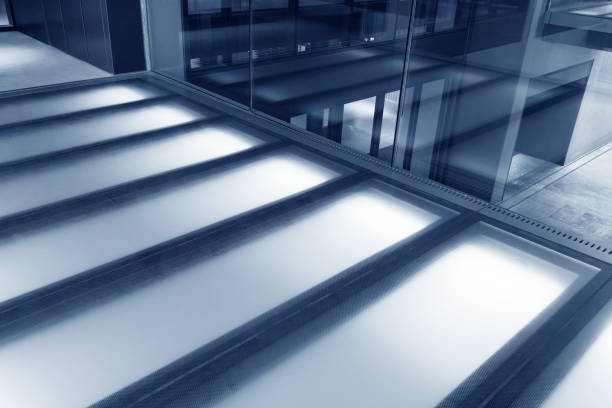
- Light diffusion without transparency. The acid-etching process creates a translucent, softly luminous surface. Natural or artificial light filters through gently, illuminating spaces below without exposing privacy — a unique property impossible to replicate in wood or concrete.
- Full customisation. Bear Glass offers bespoke etching services — logos, patterns, gradients, decorative motifs. Glass is available in clear, Starphire, bronze, grey, black, blue, and green, up to 1″ in thickness, in custom sizes to suit any architectural dimension.
- Structural load calculations included. Bear Glass provides engineering support to determine the correct glass thickness based on load requirements — from domestic residential floors right up to industrial-grade commercial applications. No guesswork; every installation is backed by specification expertise.
- Nationwide delivery across the USA. Operating from Queens, NY with five trucks on the road daily, Bear Glass delivers to the tri-state area five days a week and ships products across the entire country — and into Canada — with what they call the safest delivery network in the USA.
— Applications
Where Acid-Etched Glass Floors Shine Brightest
One of the most remarkable qualities of Bear Glass’s laminated acid-etched glass floor panels is their versatility. Far from being a niche showpiece, they are a genuinely functional flooring solution suited to a wide variety of project types.
01
Luxury Residences
Mezzanine levels, staircases, and internal bridges that let light cascade through a home’s vertical space.
02
Hotels & Hospitality
Lobby walkways, roof terraces, and spa areas where the floor itself becomes a design statement.
03
Restaurants & Bars
Illuminated floor sections over wine cellars or kitchen views — theatre beneath every step.
04
Commercial Offices
Open-plan multi-level offices where visual connectivity between floors improves collaboration and atmosphere.
05
Retail Environments
Custom logo-etched glass floors that reinforce brand identity at the most fundamental touchpoint.
06
Museums & Galleries
Gallery walk-overs that allow visitors to view objects or artwork displayed beneath their feet.
— Sustainability & Longevity
The Long Game: Glass as a Responsible Choice
Sustainability in architecture is no longer a buzzword — it is a baseline expectation. On this front, glass flooring holds a compelling advantage over both concrete and wood. Glass is fully recyclable, produced without the same environmental strain as harvesting old-growth timber, and engineered to last for generations without the intensive maintenance cycles that wood demands.
Bear Glass’s acid-etched panels can be manufactured using low-emission processes, and their durability means fewer replacement cycles over a building’s lifetime. A glass floor installed today — properly specified, properly loaded — may genuinely outlast the building itself.
Wood, by contrast, has an ongoing ecological cost: replacement boards, chemical stains, varnishes and sealants, and the refinishing labour that accumulates every few years. Concrete, once poured and cracked, typically requires patching, resurfacing, or full replacement — all of which generate significant construction waste.
The calculus is increasingly clear: glass is not just the most beautiful flooring option available — it is also, over a building’s full lifecycle, one of the most responsible ones.
— Why Bear Glass Inc.
Four Generations of Glass Mastery
Bear Glass Inc. is not a new entrant chasing a trend. As fourth-generation glaziers operating out of Queens, New York, they carry more than two decades of institutional knowledge in glass fabrication, specification, and installation. Their facility maintains an extensive inventory of glass and mirror sheets — including laminated, tempered, fire-rated, and custom etched varieties — with thicknesses up to ¾ inch in standard stock.
Their team provides full design and specification support: Bear Glass will calculate the correct glass thickness and panel construction for your specific load requirements, whether the application is a domestic walkway or an industrial floor in a high-traffic commercial building. This engineering partnership is something no timber merchant or concrete contractor can offer in the same way.
Their delivery network — five trucks on the road daily across the tri-state area — means that projects in New York, New Jersey, Connecticut, and beyond receive prompt, professional service. For clients further afield, Bear Glass ships glass products across the entire continental USA and into Canada.
The verdict from professionals who rely on them speaks clearly. Construction companies, upscale retail designers, art galleries, and dance studios across the Northeast have found Bear Glass to be a reliable partner who delivers quality on schedule — and goes the extra mile to match the precise product to the vision.
Ready to Walk on Glass?
Contact Bear Glass Inc. today for a no-obligation quote and design consultation. Let their team of expert glaziers specify the perfect laminated acid-etched glass floor for your project.