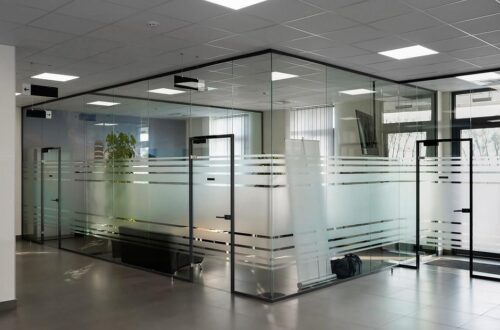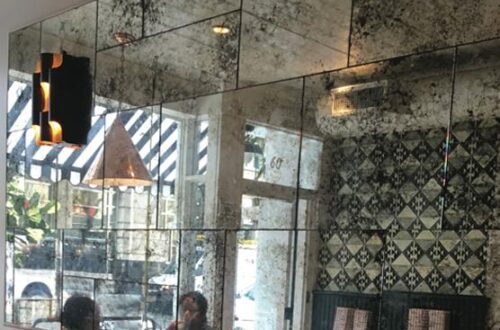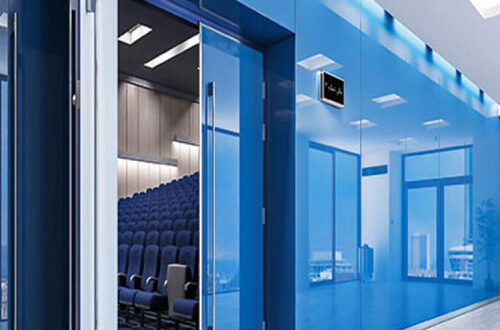
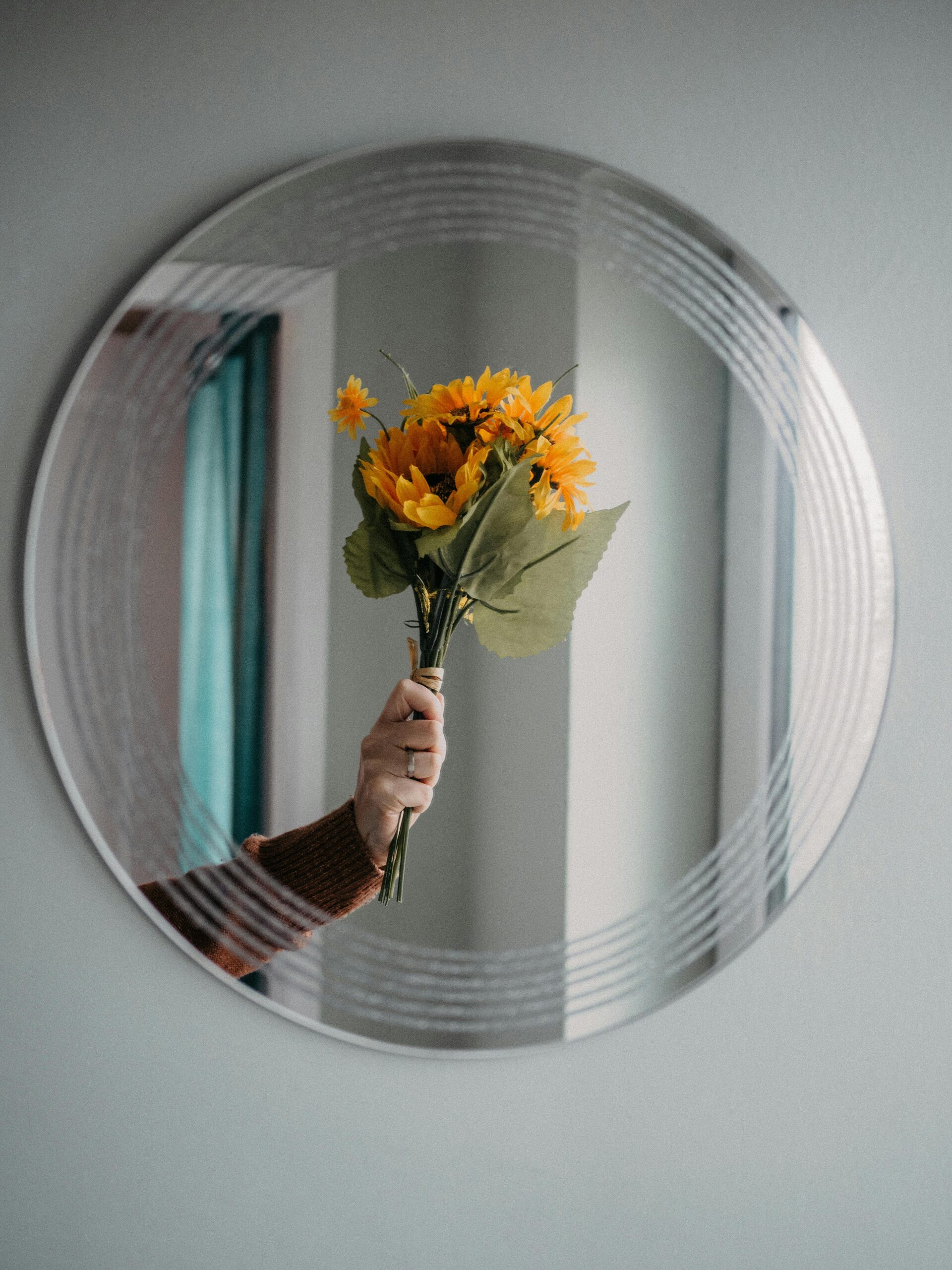
There is a quiet revolution happening on the walls of the world’s finest hotels, residences, restaurants, and corporate headquarters. Not a loud statement — but a whisper of frosted light, a surface that reflects without blinding, that defines space without confining it. The material behind this shift is the acid-etched mirror.
What Exactly Is an Acid-Etched Mirror?
An acid-etched mirror begins life as a standard mirror — a sheet of float glass with a metallic backing that creates a reflective surface. The transformation happens through a carefully controlled chemical process: one face of the glass is exposed to hydrofluoric acid or an acid-based compound, which microscopically roughens the surface. The result is a mirror that reflects light diffusely — softly — rather than creating a sharp, full reflection.
The outcome is extraordinary. The surface appears satin-smooth, with a luminous depth you cannot achieve through sandblasting, film application, or painted finishes. Because the etching penetrates the glass itself, it is permanent, maintenance-friendly, and utterly resistant to peeling, yellowing, or wear.
Unlike frosted glass (which is typically non-reflective), an acid-etched mirror retains reflectivity — it still bounces light and creates the perception of expanded space, but without the glare, distortion, or harshness of a clear mirror. The combination of soft reflection and visual depth is what makes it so sought-after in modern architectural applications.
An acid-etched mirror does not merely reflect a room — it translates it into something more considered, more composed. It is the architectural equivalent of a soft-focus lens.
Acid etched mirror by Bear Glass takes this process further, offering custom opacity levels, bespoke etched patterns, large-format sheets, and precisely controlled surface textures matched to the architect’s or designer’s specification. Whether a full-floor lobby wall or a bathroom vanity panel, Bear Glass treats each project as a unique composition.
Where to Use Acid-Etched Mirrors — and Why
Modern architecture demands materials that perform on multiple levels simultaneously: aesthetic, spatial, acoustic, and practical. Here are the definitive placement categories where acid-etched mirror excels — and why no other mirror type can substitute.
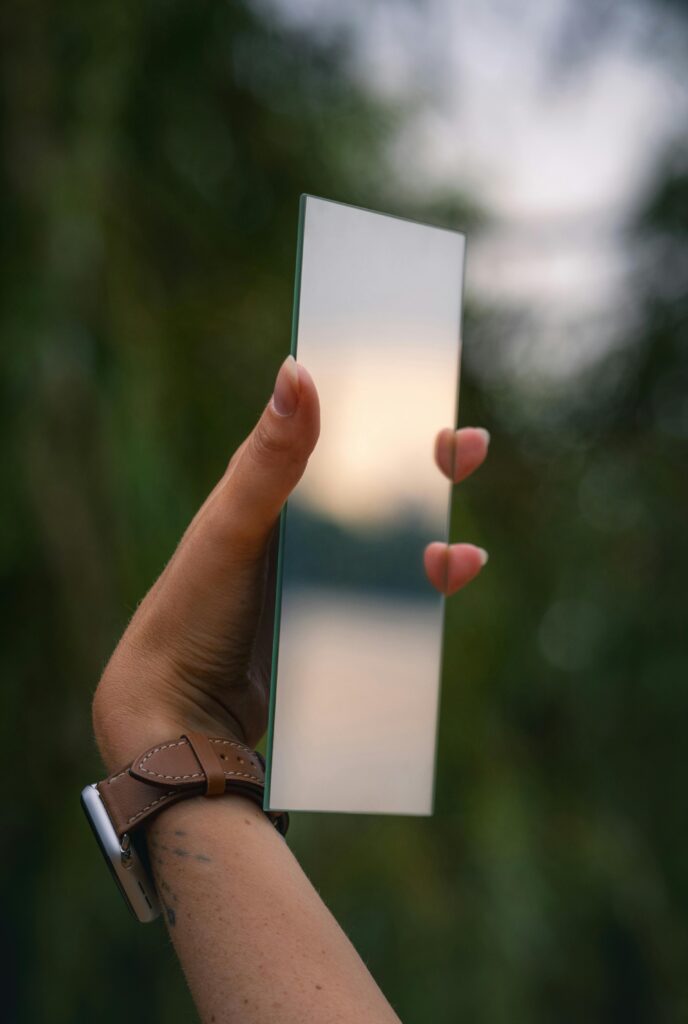
Hotel Lobbies & Grand Foyers
A hotel lobby sets the entire tone of a guest’s experience in the first eight seconds. Clear mirrors in lobbies create visual chaos — every angle reflects crowds, luggage, harsh lighting rigs, and service staff. The result is a space that feels smaller and noisier than it is.
An acid-etched mirror on lobby walls or ceiling panels reflects light uniformly, amplifying luminosity without the sharp reflections that create visual clutter. The effect is an atmosphere of serene grandeur. The space reads as larger, the lighting feels warmer, and the design intention remains visible — not distorted. Bear Glass produces acid-etched mirror panels in oversize formats (up to 130″ × 84″) that eliminate seams and create uninterrupted visual planes.
Elevator Interiors & Lift Cabs
Elevator interiors are among the most psychologically charged micro-spaces in architecture. Clear mirrors create a hall-of-mirrors effect in these tight enclosures — disorienting, anxiety-inducing, and uncomfortable for riders who find full reflections distressing.
Acid-etched mirrors in elevator cabs transform the experience entirely. The diffuse reflection opens the space without confrontation — riders feel a sense of expanded volume without the vertigo of infinite reflection. Etched patterns can be incorporated to align with the building’s design language, turning the elevator into a branded architectural moment. This is precisely where acid etched mirror by Bear Glass has become a fixture in premium commercial and residential tower projects.
Spa Facilities & Wellness Centres
The design language of wellness is rooted in serenity, softness, and the absence of stimulation overload. A clear mirror in a spa context is a design contradiction — it introduces visual sharpness, reflective glare, and body-scrutiny anxiety into a space specifically intended to foster release and calm.
Acid-etched mirrors in changing rooms, relaxation pools, steam rooms, and treatment corridors maintain the hygiene and spatial benefits of mirror glass while eliminating the psychological “scrutiny” effect. The soft reflection is forgiving, ambient, and deeply in harmony with the wellness aesthetic that premium spa brands and architects invest so heavily in achieving.
Corporate Offices & Executive Boardrooms
In high-performance workplace architecture, the balance between openness and privacy is everything. Mirror glass walls in offices create distraction — movement reflections, screen glare, and a fishbowl dynamic that reduces concentration.
Acid-etched mirror panels on feature walls in boardrooms, reception areas, or corridor ends serve a precise spatial function: they extend visual depth without creating the distracting reflectiveness of clear glass. When used as partition elements with custom corporate etching, they become functional art that defines zones without the oppressive weight of solid walls. This is a dominant thread in current acid etched mirror trends across commercial interiors globally.
Luxury Residential Bathrooms
The bathroom is the most personal architectural space in any home. Clear mirrors can be glaring under the artificial lighting typical of bathrooms — overhead LEDs, vanity strips — creating shadows and harshness that undermine the room’s quality of finish.
An acid-etched mirror in the bathroom creates a luminous, evenly reflective surface. Light scatters rather than bouncing in sharp planes, creating a softer, more flattering ambience. In wall-to-wall applications — a growing trend in hotel-suite bathrooms and high-specification private residences — the visual expansion is dramatic without the industrial coldness of clear mirror. Frameless etched mirror panels from floor to ceiling represent the current pinnacle of bathroom design.
Restaurant & Hospitality Dining Spaces
Great restaurant design creates a controlled sensory environment where everything contributes to how food tastes, how long guests stay, and how high the average check can climb. Clear mirrors in dining rooms are blunt instruments: they maximize perceived space but also amplify noise and destroy intimacy.
Acid-etched mirror panels on restaurant walls strike the precise balance between spatial expansion and sensory containment. The diffuse reflection enlarges the room perceptually while absorbing visual noise. When installed in panels separated by marble, brass, or dark timber, they create depth and rhythm that plain plaster cannot approach. The best contemporary dining room design increasingly treats acid-etched mirror as a structural design choice, not a decorative afterthought.
Retail Environments & Luxury Boutiques
In retail design, how a customer sees themselves in a product is commercial psychology made physical. The conventional clear mirror in a fitting room tells a pitilessly accurate story — every angle, every lighting flaw, every unflattering shadow. Premium retail brands have long understood that the experience of trying on a garment matters as much as the garment itself.
Acid-etched mirrors in boutique fitting rooms, display walls, and retail floors create the feeling of entering a curated visual world. The soft reflection is aspirational — the customer sees themselves as they want to look. For luxury fashion, jewellery, and cosmetics retail — sectors where acid etched mirror trends are accelerating fastest — this is not a vanity choice but a strategic one.
Stairwells, Corridors & Transitional Spaces
Transitional architecture — the connecting tissue of stairs, corridors, and landings — is often the most neglected yet most frequently experienced part of any building. These are the spaces people move through dozens of times a day, and their quality has an outsized effect on the perception of the overall environment.
Installing acid-etched mirror panels in stairwells and corridors creates visual depth that transforms a functional passage into a spatial experience. The reflectivity extends the apparent width and height of narrow corridors without introducing the disorienting infinity effect of clear mirrors. Vertical panels of full-height etched mirror at corridor ends — widely used in contemporary hospitality projects — create a visual terminus that makes the corridor feel intentional and spacious.
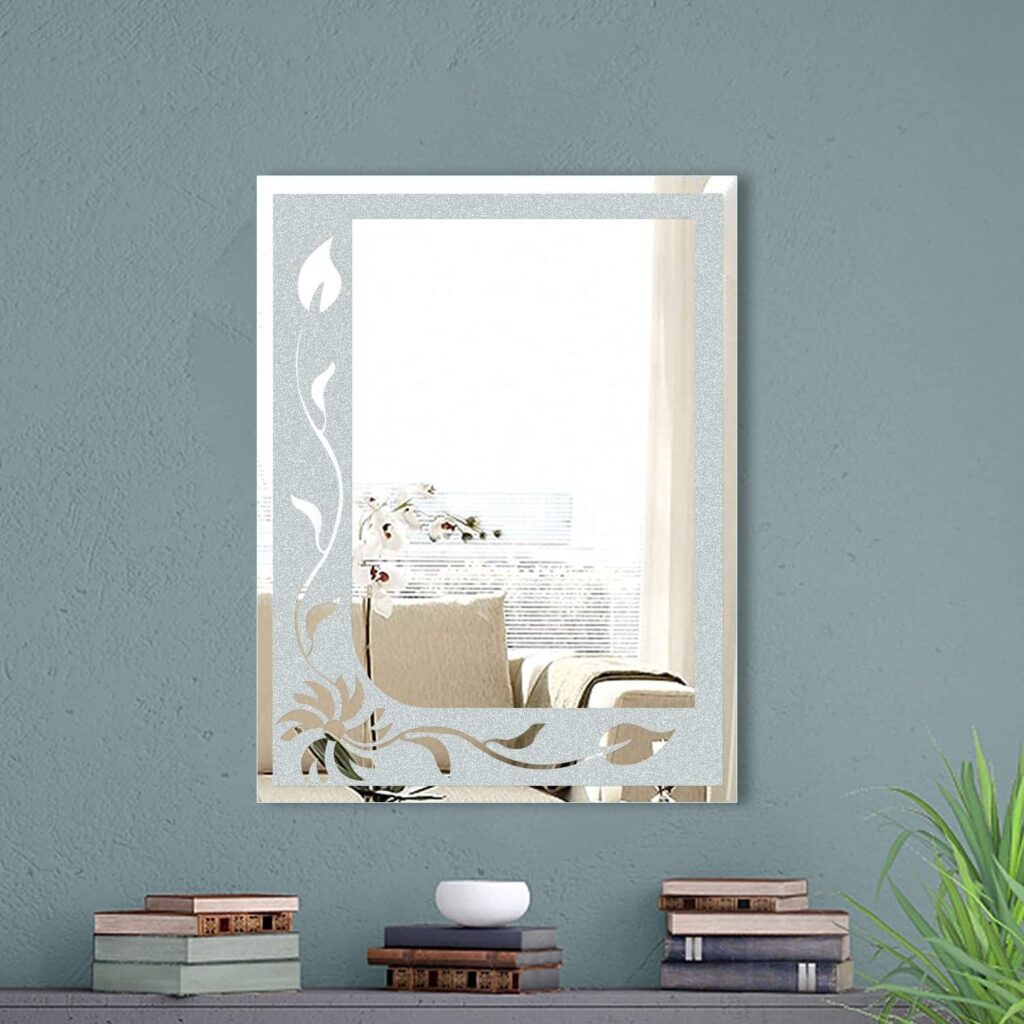
Acid-Etched vs. Other Mirror Types: The Full Picture
Architects and designers are frequently presented with a range of mirror types. Here is how the acid-etched mirror stacks up honestly against every other option across the criteria that matter in modern architectural specifications.
| Criterion | Clear Mirror | Acid-Etched Mirror | Film-Frosted Mirror | Sandblasted Mirror |
|---|---|---|---|---|
| Glare-free soft reflection | ✗ | ✓ | ~ | ~ |
| Permanent surface finish | ✓ | ✓ | ✗ | ✓ |
| Peeling / delamination risk | ✓ | ✓ | ✗ | ✓ |
| Custom pattern / bespoke etching | ✗ | ✓ | ~ | ~ |
| Moisture and humidity resistance | ~ | ✓ | ✗ | ~ |
| Large-format architectural sheet | ✓ | ✓ | ~ | ✗ |
| Easy to clean / maintain | ✓ | ✓ | ✗ | ~ |
| Compatible with SGP / laminated safety glass | ✓ | ✓ | ✗ | ~ |
| Aesthetic warmth & spatial softness | ✗ | ✓ | ~ | ~ |
| Long-term colour stability | ✓ | ✓ | ✗ | ✓ |
[ ✓ Full advantage | ~ Partial / context-dependent | ✗ Significant limitation ]
Acid Etched Mirror Trends Shaping 2024–2026
The acid-etched mirror category has moved far beyond a simple frosted finish. These are the design and specification trends reshaping how architects and designers deploy etched mirror in contemporary projects.
Gradient Etching
A transitional acid-etch that moves from fully clear at the base to fully frosted at the top — creating seamless visual blending that flat finishes cannot achieve. Increasingly used in hospitality and high-end residential bathroom walls.
Bespoke Pattern Libraries
Custom geometric, botanical, and abstract etched patterns are replacing off-the-shelf frosted panels as architects seek to embed brand identity directly into the glass surface. Bear Glass offers full custom pattern development for architectural clients.
Tinted Etched Mirror
Combining acid-etching with bronze, grey, or black mirror bases produces surfaces of extraordinary visual richness — the etched satin layer over a warm or dark reflective base creates depth effects that have no parallel in any other surface material.
Floor-to-Ceiling Seamless Panels
Advances in large-format glass cutting mean full-height panels (up to 130″) are now achievable with consistent finish across the entire sheet. Eliminating horizontal joints has fundamentally changed the spatial possibilities in tall residential and commercial spaces.
Integrated Lighting Details
Acid-etched mirror combined with embedded LED edge lighting creates glowing panel effects of exceptional subtlety — the diffuse surface distributes light evenly, creating a luminous wall rather than a harsh light source. Fast-growing in premium restaurant and bar design.
Safety-Laminated Etched Mirror
Building codes increasingly require laminated safety glass in mirror applications. Acid-etched mirror laminated with SGP interlayer combines the architectural finish with Class A safety performance — opening applications in schools, healthcare facilities, and public transport hubs.
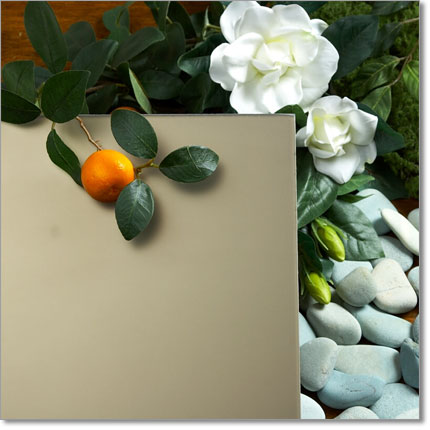
How Acid Etched Mirror by Bear Glass Is Made
Not all acid-etched mirrors are created equal. The quality of the process determines the quality of the outcome — and Bear Glass has refined each stage over decades of architectural glass production.
Raw Glass Selection
Every acid etched mirror by Bear Glass begins with premium float glass selected for flatness consistency and clarity. The choice of base glass — standard, low-iron, tinted, or specialty — determines the final visual character of the etched surface. Low-iron glass creates an exceptionally white, neutral frosted appearance ideal for minimalist architectural applications, while bronze or grey base glass produces warmer, richer etched tones.
Mirror Backing Application
Before etching, the glass receives its metallic mirror backing — silver deposited onto one face of the glass by a controlled chemical process, then sealed with layers of protective copper and paint coating. The quality of this backing determines both the reflective quality and the longevity of the mirror. Bear Glass uses a multi-layer backing process engineered for edge stability and resistance to moisture-related deterioration, the most common cause of mirror failure over time.
Acid Etching Process
The etching process itself is where precision becomes paramount. The glass surface is exposed to a carefully formulated acid compound under controlled conditions. Variables including concentration, exposure time, temperature, and application method all determine the precise texture, opacity, and uniformity of the final surface. Bear Glass’s controlled etching environment produces surfaces of exceptional consistency — critical in large-format architectural applications where any variation across a panel would be immediately visible.
Quality Inspection & Finishing
Every acid-etched mirror panel from Bear Glass undergoes a rigorous visual inspection process under controlled lighting conditions before it leaves the facility. Surface uniformity, edge quality, backing integrity, and dimensional accuracy are all verified. Panels for laminated safety applications receive additional post-lamination inspection to ensure bond integrity and optical clarity through the laminate layer. Custom-cut panels are edge-polished and packaged individually to prevent surface contact during transit.
Custom Specification & Delivery
Bear Glass works directly with architects, interior designers, contractors, and project managers to specify acid-etched mirror products tailored to each project’s exact requirements. From opacity level and base glass specification to custom panel sizing, pattern etching, lamination requirements, and installation detailing — the Bear Glass team provides technical and design support through every phase of the specification and procurement process.
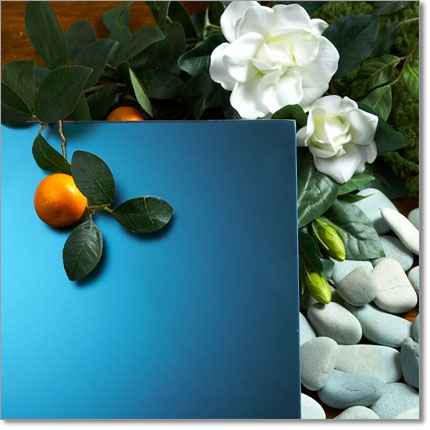
Why Architects Choose Bear Glass
Bear Glass is one of the leading specialty glass fabricators and distributors in the United States, with decades of experience serving architects, interior designers, glazing contractors, and specialty glass installers across the country and internationally.
The company’s acid-etched mirror program represents one of the most comprehensive in the market — encompassing standard stocked sizes, large-format custom cutting, custom opacity specifications, tinted base glass options, laminated safety configurations, and full bespoke pattern etching capabilities.
What distinguishes Bear Glass is not simply product range, but technical depth. The team includes glass specialists with hands-on expertise in architectural specification, code compliance, glazing system compatibility, and installation detailing — providing a level of project support that standard glass distributors cannot match.
- Large-format capability: Acid-etched mirror panels up to 130″ × 84″ for seamless architectural installations without joins.
- Custom opacity control: Variable frosted density from light haze to near-opaque, matched to project lighting conditions and design intent.
- Tinted base glass: Acid-etched mirror available on bronze, grey, black, and low-iron base glass for extended design vocabulary.
- Safety lamination: SGP and PVB laminated etched mirror for code-compliant applications in commercial and public-access environments.
- Custom pattern etching: Bespoke geometric, botanical, or abstract patterns precision-etched into the glass surface.
- Architectural technical support: Full specification, shop drawing review, and code compliance consultation for architects and project teams.
Frequently Asked About Acid-Etched Mirror
How is an acid-etched mirror different from a frosted mirror?
The distinction is important. A frosted mirror typically refers to a mirror treated with adhesive film or sandblasting to create opacity on the front face. An acid-etched mirror, by contrast, is permanently altered at the molecular level of the glass itself — the acid microscopically roughens the glass surface to scatter light, creating a finish that cannot peel, yellow, or be removed. The acid-etching process also produces greater uniformity and a distinctly finer surface texture than sandblasting, which can leave a slightly gritty or uneven finish.
Can acid-etched mirror be used in wet areas such as bathrooms and pool surrounds?
Yes, provided the correct specification is used. Bear Glass produces acid-etched mirror with moisture-resistant multi-layer backing specifically engineered for wet and humid environments. In high-moisture environments such as steam rooms, pool enclosures, or shower walls, the specification of edge protection and installation detailing is also critical — the Bear Glass technical team can provide full guidance for these applications to ensure long-term performance.
What is the largest size available for acid-etched mirror panels?
Bear Glass can produce acid-etched mirror panels in oversize formats up to 130 inches by 84 inches, enabling full-height, seamless wall installations in residential and commercial settings. Custom panel sizing is available throughout the standard to large-format range, and the team can advise on optimal panel layouts for specific architectural configurations to eliminate unnecessary joints.
Is acid-etched mirror available in safety glass configurations?
Yes. Bear Glass produces acid-etched mirror laminated with either PVB or the higher-performance SGP interlayer, creating safety glass panels that meet building code requirements for overhead, stair, balustrade, and other code-regulated mirror applications. This is one of the most frequently specified configurations in commercial architectural projects and an area where Bear Glass’s fabrication expertise is particularly valuable.
Can specific patterns be etched into the mirror surface?
Yes. Bear Glass offers full bespoke pattern etching — geometric, botanical, abstract, or brand-derived patterns can be developed in collaboration with the design team and precision-etched into the mirror surface using CNC-controlled masking and acid application. Custom pattern etching is available from small decorative applications through to large-format architectural feature walls. Lead times for bespoke patterned panels vary by design complexity and are confirmed at specification stage.
How do you clean and maintain an acid-etched mirror?
One of the practical advantages of acid-etched mirror over film-frosted alternatives is its ease of maintenance. The etched surface can be cleaned with standard glass cleaning agents and a soft, non-abrasive cloth. Because the etching is integral to the glass surface rather than a coating, it cannot be damaged by cleaning. Avoid abrasive cleaning products or scrubbing pads, which can create micro-scratches in the etched surface over time. For high-traffic applications, the Bear Glass team can advise on specific cleaning protocols.
Begin Your Glass Specification
Talk to the Bear Glass architectural team about acid-etched mirror for your current project — custom sizing, pattern development, safety configurations, and full technical support. Connect to us via 718-832-3604