Introduction: Where Safety Meets Design
In today’s built environment, fire safety is not a feature — it’s a requirement. Whether you’re designing a high-rise office tower, a school, a hospital corridor, or a luxury retail space, the materials you choose can mean the difference between containment and catastrophe when a fire breaks out.
Fire-rated glass stands at the intersection of modern architecture and life-safety engineering. It allows buildings to remain open, light-filled, and visually connected — while providing critical minutes for occupants to evacuate and for firefighters to respond. Bear Glass Inc., serving clients across New York and New Jersey, has long been a trusted supplier of premium fire-rated glazing solutions designed for exactly these demands.
This blog explores where fire-rated glass is used across professional sectors, how it is manufactured, and why it is a smart investment for anyone building or retrofitting a structure.
What Is Fire-Rated Glass?
Fire-rated glass is a specially engineered safety glass designed to resist the spread of flames, smoke, and hot gases for a defined period — typically 20, 45, 60, 90, or up to 180 minutes — depending on the product and application. Unlike conventional glass, which shatters or melts rapidly under high temperatures, fire-rated glass maintains its structural integrity long enough to give occupants time to escape and for emergency systems to activate.
It is not simply “thicker glass.” Fire-rated glass is the result of advanced material science and precision manufacturing — and it must pass rigorous standardized tests before it can be used in any regulated building application.
Professional Fields Where Fire-Rated Glass Is Essential
1. Commercial Office Buildings
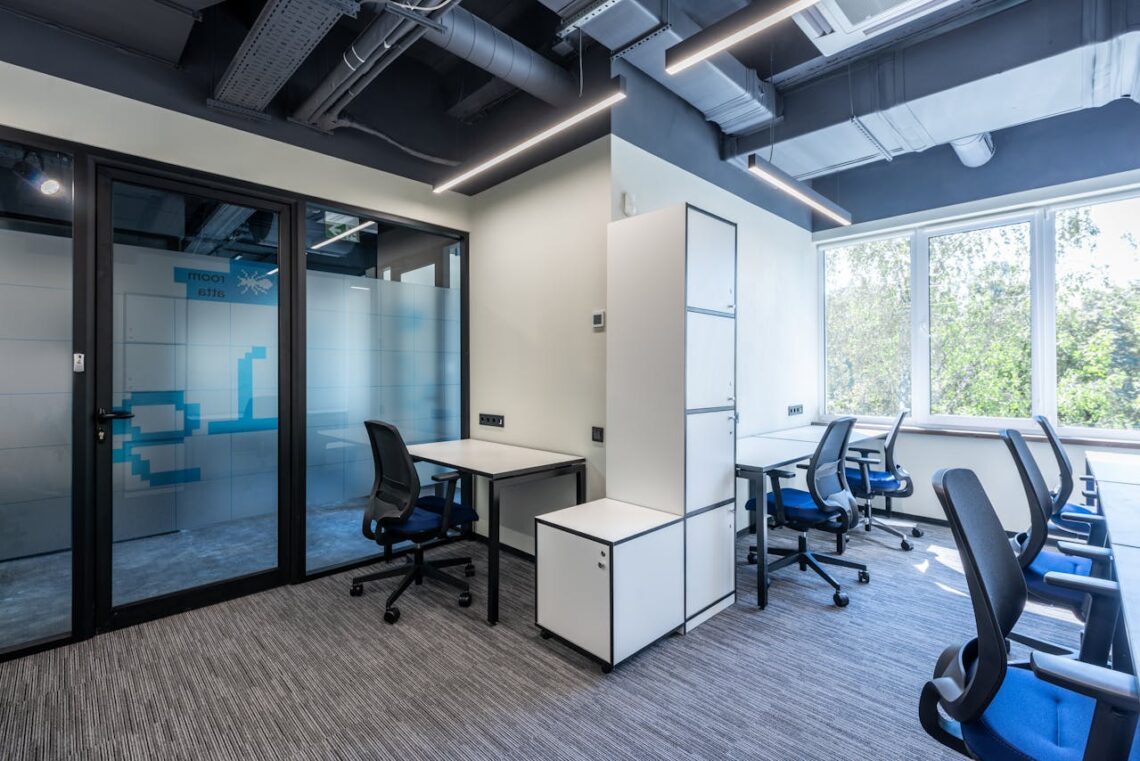
Modern office design prioritizes open floor plans, glass partitions, and natural light. Fire-rated glass makes this possible without sacrificing the fire compartmentalization required by building codes. It is used in:
- Interior partitions and demising walls separating tenant spaces
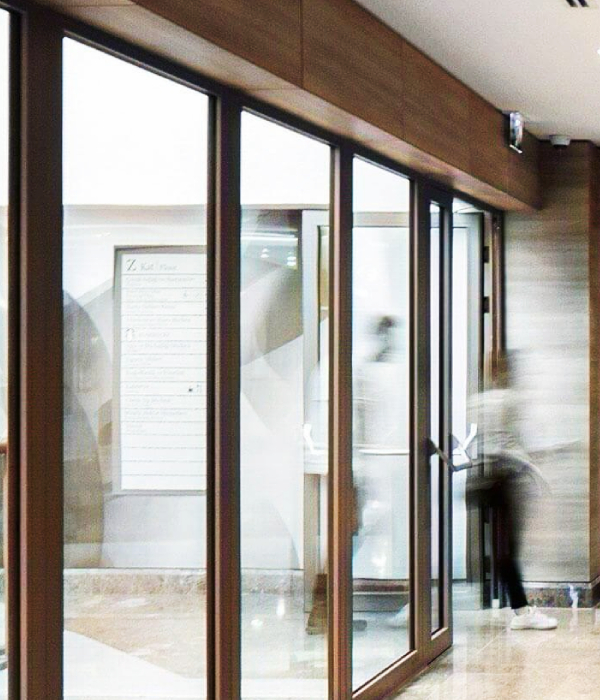
- Lobby and atrium enclosures that must remain transparent while forming a fire barrier
- Elevator shaft enclosures where smoke containment is critical
- Conference room glazing where visibility and safety must coexist
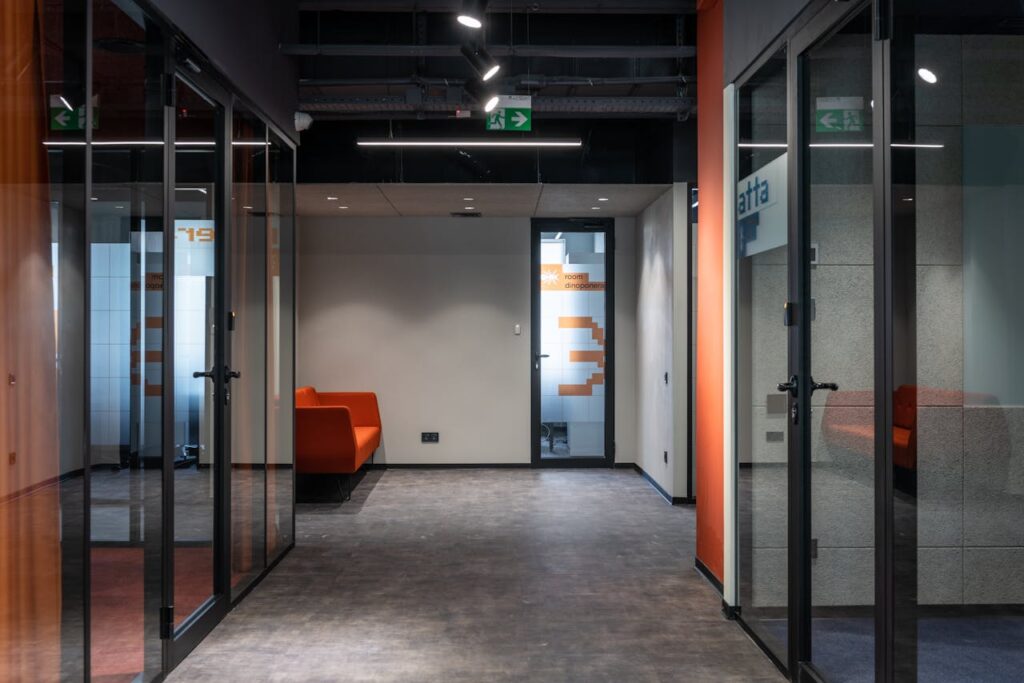
In high-rise buildings, where evacuation takes longer, fire-rated glazing in stairwells and corridors is often mandatory. It keeps escape routes visible and passable even as fire spreads in adjacent areas.
2. Healthcare Facilities
Hospitals and medical centers present unique fire-safety challenges. Patients in ICUs, operating rooms, or recovery wards cannot always self-evacuate. Fire-rated glass is critical here because it:
- Contains fire and smoke while allowing staff visibility into patient areas
- Protects corridors used for patient transport during emergencies
- Complies with strict healthcare building codes (such as NFPA 101, the Life Safety Code)
- Maintains hygiene standards since glass surfaces are easy to clean and non-porous
In surgical suites and pharmacy areas with hazardous materials, the ability to contain fire while maintaining line of sight is not just convenient — it is lifesaving.
3. Educational Institutions
Schools, colleges, and universities are high-occupancy environments with strict fire egress requirements. Fire-rated glass is used throughout:
- Classroom corridor windows — allowing visibility while maintaining fire separation
- Laboratory enclosures — where chemical hazards increase fire risk
- Stairwell enclosures — providing safe evacuation paths
- Library and administrative partitions — where open design and safety intersect
Building codes for educational occupancies often require rated assemblies in all exit corridors. Fire-rated glass satisfies these requirements while keeping environments bright and connected.
4. Hospitality and Retail
Hotels, restaurants, and retail environments invest heavily in aesthetics. Fire-rated glass allows designers to maintain glass-forward interiors — open atriums, glazed corridors, transparent facades — without compromising on safety compliance.
In hotel stairwells, fire-rated glazing prevents smoke spread while preserving the architectural openness guests expect. In retail malls, fire-rated partitions between tenants can contain a fire to a single unit, protecting the broader facility and minimizing property loss.
5. Industrial and Manufacturing Facilities
Warehouses, factories, and processing plants often contain flammable materials, making fire containment a top operational priority. Fire-rated glass is used in:
- Observation windows in production areas, allowing supervisors to monitor operations from a safe enclosure
- Control room enclosures protecting personnel and equipment from industrial fires
- Loading dock and storage area partitions that must maintain separation between high-risk zones
Here, fire ratings of 90 to 180 minutes are common, given the intensity of potential industrial fires.
6. Government and Institutional Buildings
Courthouses, municipal buildings, libraries, and civic centers often require fire-rated glass by code — and also by the nature of their occupancy, which may include large public gatherings. Additionally:
- Security glazing is often combined with fire ratings in government buildings
- Historic preservation projects use fire-rated glass to modernize fire safety without altering the visual character of heritage structures
- Transit hubs (airports, train stations) use fire-rated glass to maintain open, visible concourses while meeting life-safety codes
How Fire-Rated Glass Is Manufactured
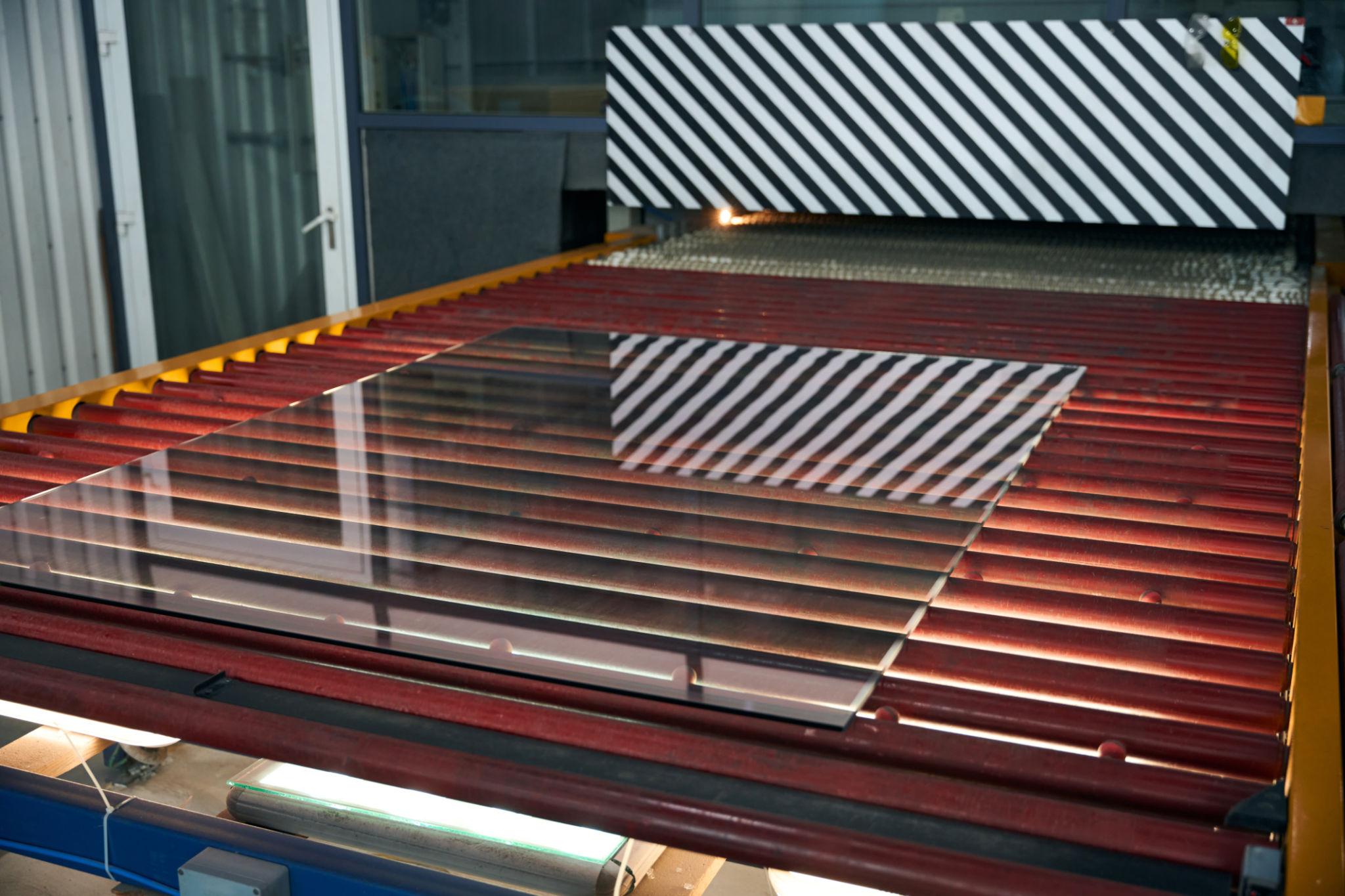
The manufacturing of fire-rated glass is fundamentally different from standard float glass. There are three primary types, each with its own production process.
Glass-Ceramic (Pyroceramic) Glass
This is the most widely used type for fire-protective glazing. Products like PYRAN® Platinum by SCHOTT — carried by Bear Glass Inc. — fall into this category.
Manufacturing Process:
- Raw material melting: Specialty raw materials, including lithium aluminosilicate compounds, are melted at extremely high temperatures in a controlled furnace.
- Forming: The molten glass is formed into flat sheets using precision rollers or float processes.
- Controlled crystallization (ceramization): The glass is subjected to a precise heat treatment cycle that converts a portion of the amorphous glass into a crystalline ceramic structure. This is the critical step. The resulting glass-ceramic has a near-zero coefficient of thermal expansion — meaning it expands almost negligibly when heated. This property is what allows it to withstand the extreme thermal shock of firefighting water hoses.
- Annealing and cutting: The glass-ceramic is cooled in a controlled annealing process, then cut to specification.
- Optional surface treatment: For impact-safety applications, a surface-applied safety film is added (creating products like PYRAN® Platinum F), or the glass-ceramic sheets are laminated with interlayers (creating products like PYRAN® Platinum L).
The result is a transparent, true-color glass-ceramic that can sustain fire ratings from 20 to 180 minutes while passing hose-stream tests and positive pressure standards like UL 10C.
Tempered and Wired Glass
Older fire-rated assemblies often used wire glass — a float glass product with embedded steel wire mesh that holds fragments together in a fire. While largely superseded in modern projects by ceramic and laminated products, wired glass is still code-compliant in some applications.
Tempered fire-rated glass is created by heating standard glass and then rapidly cooling it (quenching), which puts its surfaces under compression and its interior under tension. This increases mechanical strength. However, tempered glass alone has limited fire resistance compared to glass-ceramic.
Laminated Fire-Resistive Glass
For applications requiring not just fire protection but also thermal insulation (i.e., resistance to radiant heat transfer), multi-layer laminated glass assemblies are used. These typically consist of:
- Multiple glass or glass-ceramic lites
- Intumescent interlayers — clear, gel-like materials that expand dramatically when exposed to heat, forming an opaque, insulating foam barrier
This construction can achieve ASTM E119 or UL 263 ratings, which require limiting heat transmission as well as structural integrity. These are the most demanding fire-resistive assemblies, used in rated exterior walls and fire-resistive barriers where radiant heat must be blocked as well as flames and smoke.
Benefits for Buyers: Why Invest in Fire-Rated Glass?
✔ Life Safety and Liability Protection
The primary benefit is the protection of human life. Fire-rated glass buys critical evacuation time. For building owners, this also translates to reduced liability. A building that meets or exceeds fire code requirements is far better positioned in the event of an incident.
✔ Code Compliance
Local building codes, the International Building Code (IBC), NFPA standards, and occupancy-specific regulations often mandate fire-rated glazing in specific locations. Bear Glass supplies products tested and listed to UL 10C, ANSI Z97.1, and CPSC 16CFR1201 — the standards inspectors and authorities look for.
✔ Insurance Advantages
Many commercial insurers offer premium reductions for properties with fire-rated construction. Investing in certified fire-rated glass can lead to long-term savings on property insurance — partially offsetting the upfront cost.
✔ Preservation of Natural Light and Openness
Unlike solid fire walls, fire-rated glass maintains visual connection and daylighting across compartmented spaces. This is architecturally significant — it allows designers to achieve open, transparent interiors without sacrificing the required fire separation.
✔ Customization Without Compromising Rating
Bear Glass’s PYRAN® Platinum products can be lightly sandblasted or finished with surface-applied opacity films to achieve privacy or aesthetic goals — without affecting the fire rating or UL listing. Insulated glazing units (IGUs) can also be constructed for thermal performance.
✔ Impact Safety in One Product
Products like PYRAN® Platinum F (with surface film) and PYRAN® Platinum L (laminated) meet the safety ratings — Category I and/or II. This means a single glazing product can satisfy both fire code and safety glazing requirements simultaneously, simplifying specification and procurement.
✔ Long-Term Durability
Fire-rated glass, properly installed and maintained, is a long-term asset. Its glass-ceramic composition is inherently stable and resistant to environmental degradation. Regular inspection ensures the glazing and its frame system continue to perform as rated over the life of the building.
Bear Glass Fire-Rated Product Lineup at a Glance
| Product | Thickness | Fire Rating | Key Feature |
|---|---|---|---|
| PYRAN® Platinum | 3/16″ (5mm) | 20–90 min | Non-impact; for transoms & windows |
| PYRAN® Platinum F | 3/16″ (5mm) | Up to 90 min (90 min in doors up to 180 min) | Impact safety-rated with surface film |
| PYRAN® Platinum L | 5/16″ | Up to 90 min (90 min in doors up to 180 min) | Laminated; impact safety-rated |
All products:
- Withstand thermal shock
- Pass positive pressure test standard UL 10C
- Are compatible with any standard fire-rated frame of the same rating
- Are suitable for insulated glazing unit (IGU) construction
A Note on Fire-Protective vs. Fire-Resistive Glazing
Buyers should understand an important distinction:
Fire-protective glazing (like PYRAN® Platinum) prevents the spread of flames and smoke but does not function as a barrier to radiant heat. It is appropriate for most interior applications.
Fire-resistive glazing — typically laminated assemblies with intumescent interlayers — limits both flame spread and heat transmission, meeting ASTM E119 or UL 263 standards. These are required for exterior walls and certain high-demand interior separations.
Bear Glass can advise on which category is appropriate for your specific application and jurisdiction.
Choosing the Right Product: What Buyers Should Ask
When specifying fire-rated glass, buyers and architects should clarify:
- What is the required fire rating? (20, 45, 60, 90, or 180 minutes)
- Is this a fire-protective or fire-resistive application? (Is radiant heat blocking required?)
- Is impact safety rating required? (Door lites, sidelites, and low-level glazing often require it)
- What is the frame system? (The glazing and frame must be rated as a system)
- Are there aesthetic or functional requirements? (Privacy film, sandblasting, IGU)
- What local code and occupancy type applies?
The team at Bear Glass — with locations in Queens Village, NY and Tinton Falls, NJ — can walk through these questions and recommend the right certified product for every application.
Conclusion: Fire-Rated Glass Is a Professional Imperative
Fire-rated glass has moved well beyond its origins as a niche safety product. Today, it is a standard specification tool for architects, contractors, code consultants, and facilities managers across healthcare, education, commercial, industrial, hospitality, and government sectors.
Its manufacturing — rooted in advanced glass-ceramic science and rigorous testing — delivers a product that does something no other material can: it keeps spaces open and light-filled while standing between a fire and the people inside a building.
For buyers, the calculus is straightforward. The upfront investment in certified, tested fire-rated glazing pays dividends in safety, compliance, insurance positioning, and long-term asset value. And with Bear Glass as your supplier, you gain access to premium PYRAN® Platinum products backed by expert guidance and decades of industry experience.
Ready to specify fire-rated glass for your next project? Contact Bear Glass Inc. at +1 (718) 832-3604 or visit bearglass.com/fire-rated-glass.php to request a quote or consult with our glazing specialists.