If you’ve ever scored and snapped a sheet of standard annealed glass, you might assume laminated glass works the same way. It doesn’t. Laminated glass is one of the most misunderstood materials in the glazing world when it comes to fabrication — and cutting it incorrectly doesn’t just ruin the piece, it can compromise the very safety features that make laminated glass valuable in the first place.
Here’s a practical look at how laminated glass is cut, and why it demands a different skill set than ordinary glass cutting.
What Makes Laminated Glass Different
Laminated glass is a sandwich: two (or more) layers of glass fused together with a tough polymer interlayer in between, usually polyvinyl butyral (PVB) or ethylene-vinyl acetate (EVA). This interlayer is what gives laminated glass its signature safety property — when the glass breaks, the shards stay bonded to the plastic layer instead of scattering. It’s the same principle used in automotive windshields and is a core requirement for architectural safety glazing, security glass, and fire-rated assemblies.
That interlayer is also exactly what makes cutting laminated glass so much harder.
Why Cutting Laminated Glass Requires More Skill
1. You’re Cutting Two Materials, Not One
Standard glass cutting relies on a simple principle: score the surface with a hardened wheel to create a controlled fracture line, then apply pressure to snap the glass cleanly along that line. This works because glass is a single homogenous, brittle material that breaks predictably along a scored line.
Laminated glass breaks that principle because there are two glass layers, each of which needs to be scored and snapped independently — and between them sits a flexible plastic interlayer that doesn’t fracture at all. It stretches, resists, and has to be separated using an entirely different method.
2. The Interlayer Doesn’t “Snap”
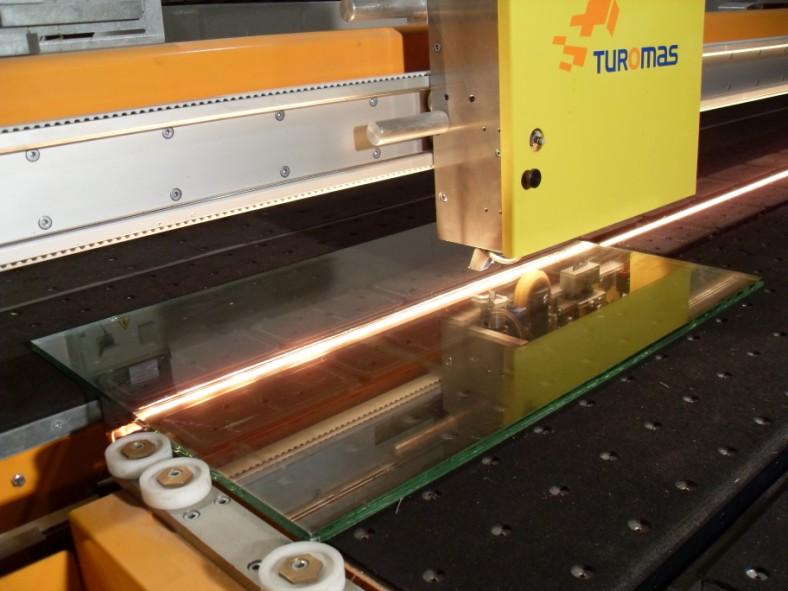
PVB and EVA are tough, elastic polymers by design — that’s the whole point of them. They’re built to hold glass together, which means they actively resist being cut or torn apart. A glass cutter’s score-and-snap motion does nothing to a plastic interlayer. Fabricators have to use a separate cutting method just for this layer, typically involving heat, a specialized blade, or a chemical softening agent, adding an entirely extra stage to the process.
3. Fracture Lines Can Wander
With regular glass, once you’ve scored it correctly, the break tends to follow the score line cleanly. With laminated glass, if the two glass layers aren’t scored in precise alignment with each other, the top and bottom fracture lines can drift apart. This creates uneven edges, stress points, and a piece that doesn’t match the intended dimensions — a costly mistake, especially on large architectural panels.
4. Risk of Interlayer Damage and Delamination
Applying too much heat, using the wrong blade, or forcing a separation too aggressively can scorch, stretch, or tear the interlayer unevenly. This weakens the bond between the glass layers and can lead to delamination — cloudy patches or bubbling where the interlayer separates from the glass — which ruins both the appearance and the structural integrity of the panel.
5. Thickness and Layer Count Add Complexity
Laminated glass isn’t always just two panes and one interlayer. Security glass, bullet-resistant glazing, and fire-rated products like multi-ply laminated assemblies can involve several glass layers and interlayers stacked together. Each additional layer multiplies the precision required, since every glass ply needs a clean score-and-snap and every interlayer needs a controlled separation.
The General Process for Cutting Laminated Glass
While techniques vary by shop and equipment, the fabrication process generally follows these steps:
1. Score the top glass layer. Using a carbide or diamond-tipped glass cutter, score the top pane along the cut line with even pressure, just as you would with monolithic glass.
2. Snap the top layer. Apply controlled pressure to fracture the top glass cleanly along the score line, taking care not to disturb the interlayer beneath it.
3. Score and snap the bottom layer. Flip the piece and repeat the process on the reverse side, aligning the score as precisely as possible with the first cut so both fracture lines meet.
4. Separate the interlayer. This is the step with no equivalent in standard glass cutting. Common methods include:
- Heat cutting: A hot wire or heated blade is run along the cut line to soften the PVB or EVA, allowing it to be pulled or cut apart cleanly.
- Mechanical cutting: A sharp utility or interlayer-specific blade is used to slice through the softened plastic.
- Chemical softening: In some cases, a solvent is applied to soften the interlayer before cutting, though this requires careful control to avoid affecting the glass edge.
5. Clean and finish the edge. Once separated, the cut edge is cleaned of any interlayer residue, and the glass edge is typically seamed or ground to remove sharp points and ensure a safe, finished edge.
Tools of the Trade
Fabricators cutting laminated glass typically rely on:
- A quality glass cutter with a carbide or diamond wheel for scoring
- A heat gun, hot knife, or dedicated interlayer cutting tool
- A straightedge or cutting guide for precision alignment
- Edge-seaming or grinding equipment for finishing
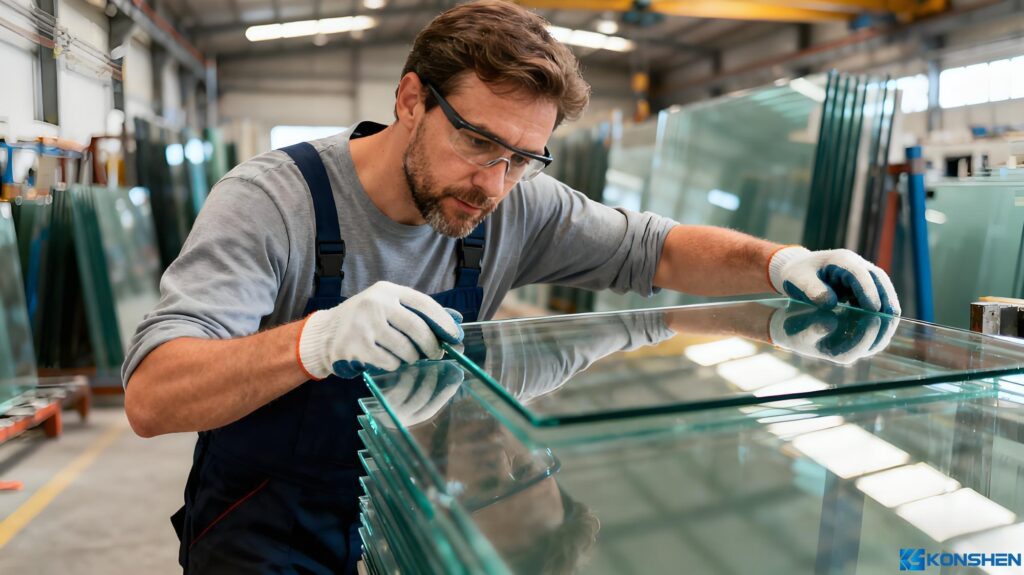
- Safety equipment — cut-resistant gloves and eye protection are non-negotiable given the combination of sharp glass edges and cutting tools
Why This Matters for Buyers and Specifiers
If you’re sourcing laminated glass for a project — whether it’s a fire-rated storefront, a security barrier, or a decorative architectural feature — the skill of the fabricator cutting your glass directly affects the finished product’s strength, clarity, and safety performance. Poorly separated interlayers, misaligned fracture lines, or scorched edges aren’t just cosmetic issues; they can undermine the very properties you’re paying for when you choose laminated over standard glass.
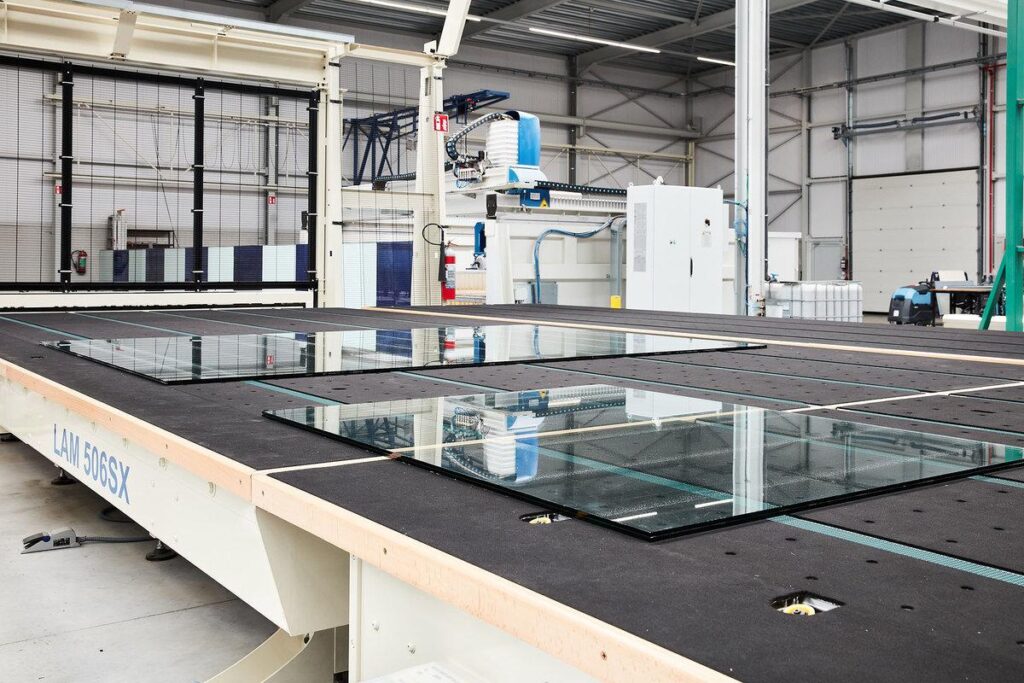
This is why experienced glass fabrication shops treat laminated glass cutting as a distinct skill, not a variation on standard glass cutting. It takes practice to consistently align two fracture lines, control an interlayer separation cleanly, and finish an edge that’s both structurally sound and visually clean.
The Bottom Line
Cutting laminated glass isn’t simply “cutting glass twice.” It’s a multi-stage process that combines traditional glass scoring with an entirely separate skill: controlling and separating a tough polymer interlayer without damaging either glass layer or the bond between them. That added complexity is exactly why laminated glass fabrication is best left to shops with the right tools, training, and experience — and why the extra care pays off in a safer, more durable final product.