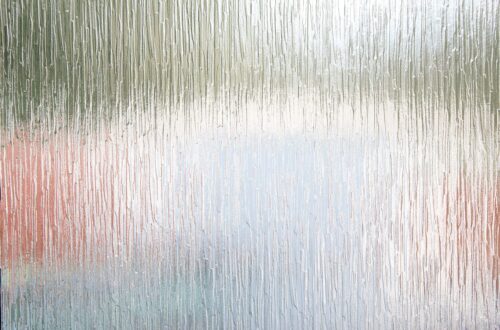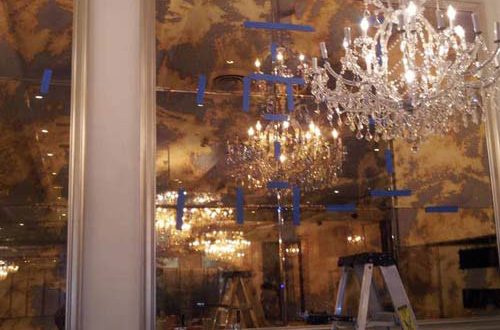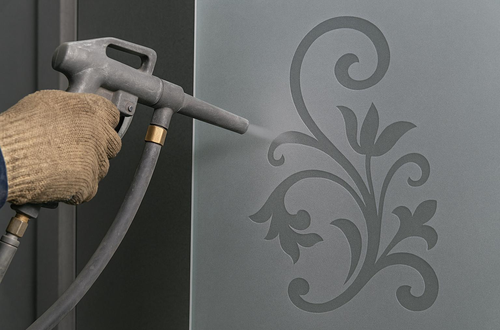
Antique mirror glass has a character that standard mirrors cannot easily reproduce. Its cloudy reflections, irregular patterns, subtle spots and aged-looking finishes bring a distinctive visual quality to architectural and interior spaces.
But behind that appearance is an interesting combination of glass processing, reflective coatings, surface treatment and fabrication knowledge.
For glass manufacturers, fabricators, glaziers and installers, understanding antique mirror glass involves much more than identifying its colour or pattern. Professionals also need to understand how the mirror is constructed, how its decorative appearance is achieved, what can affect its reflective backing and how the finished product should be handled after installation.
More importantly, a beautifully fabricated antique mirror should retain its appearance for as long as possible. That depends on decisions made at several stages, starting with material selection and continuing through fabrication, installation and regular maintenance.
Let’s look at what happens behind the glass.
1. What Exactly Is Antique Mirror Glass?
Antique mirror glass is a decorative mirror product designed to recreate the appearance of naturally aged mirrors.
Unlike a conventional mirror, which generally aims for a uniform reflective surface, antique mirror features intentionally developed visual variations. These may include cloudy areas, irregular spotting, dark patches, fine veining, faded sections and different tonal effects.
The final appearance depends on the particular finish and manufacturing technique.
Some antique mirrors have a lightly distressed appearance, while others feature stronger patterns that create a dramatic, weathered look.
For glass professionals, one important distinction is worth remembering: the distressed appearance is intentional. It is part of the product’s design, not necessarily evidence of poor manufacturing or deterioration.
However, intentional distressing should never be confused with uncontrolled corrosion, damaged backing or defects that develop after production.
That distinction becomes particularly important during quality inspection.
2. How Is Antique Mirror Glass Built?
To understand antique mirror construction, it helps to first understand how a conventional mirror is manufactured.
A typical back-silvered mirror is built around a glass substrate with a reflective metallic coating and protective layers on its rear surface.
Although the exact construction varies between manufacturers, a conventional silvered mirror generally involves the following stages.
Step 1: Selecting the glass substrate
Everything begins with the glass itself.
Float glass is commonly used as the base material because it provides a relatively smooth, flat and uniform surface for mirror production.
The glass is selected according to the intended application, thickness, dimensions, optical requirements and final fabrication needs.
For decorative antique mirrors, the base glass also influences the final appearance.
For example, clear float glass has a slight greenish tint due to its iron content. Low-iron glass can be considered when a cleaner, more neutral appearance is required, particularly for certain coloured mirror finishes.
For fabricators, selecting the correct substrate at the beginning helps avoid unnecessary colour and appearance differences later.
Step 2: Cleaning and preparing the glass surface
Before a reflective coating can be deposited, the glass surface needs careful preparation.
Manufacturers clean the glass to remove dust, grease, particles and other contaminants that could interfere with coating adhesion or create visible irregularities.
Depending on the production system, the process may involve mechanical washing, rinsing and chemical surface preparation.
Why does this matter?
Even a small amount of contamination can affect coating uniformity. In mirror production, surface preparation is not simply a cleaning operation; it is an important part of achieving a consistent reflective product.
Step 3: Applying the reflective layer
This is where the glass starts becoming a mirror.
In conventional silvered mirror production, a very thin layer of metallic silver is deposited onto the prepared rear surface of the glass through a controlled chemical process.
The silver layer is responsible for producing the mirror’s reflective appearance.
Some mirror products use alternative reflective technologies, so the construction should always be confirmed with the manufacturer.
For glass professionals, this stage is especially important because the reflective coating is delicate compared with the glass substrate itself.
Damage to the coating can affect the mirror’s appearance and long-term performance.
Step 4: Applying protective layers
A reflective metallic layer needs protection.
Traditional mirror constructions may include a copper protective layer followed by backing paint. Modern copper-free systems use alternative protective treatments.
The purpose of these protective layers is to help shield the reflective coating from moisture, chemicals, physical damage and environmental exposure.
Depending on the product, manufacturers may apply one or more protective coatings and cure them under controlled conditions.
This is one of the reasons why a mirror should not be treated as an ordinary piece of glass during handling and installation. The front surface may be glass, but the rear coating system plays an equally important role in its durability.
Step 5: Creating the antique appearance
This is the stage that gives antique mirror its distinctive personality.
Unlike ordinary mirror production, decorative antique mirror manufacturing introduces a designed aged effect.
Different manufacturers may use different methods to develop this appearance. Depending on the product, these can involve controlled alteration, selective removal, masking, surface treatments or decorative coating techniques.
The objective is to create a particular distribution of cloudy areas, spots, patterns, tonal differences or veining.
The degree of distressing can vary significantly.
A light antique finish may have a subtle, softly aged appearance, while a heavier finish can feature more noticeable dark patches and irregular patterns.
The exact technique is manufacturer-specific, so it would be inaccurate to assume that every antique mirror is made using the same chemical process or that every pattern is created directly in the silver layer.
For fabricators and specifiers, the practical takeaway is simple: understand the particular finish before planning its fabrication and installation.
Step 6: Final inspection and finishing
Once the decorative finish and protective construction are complete, the product should be inspected for its intended appearance and manufacturing quality.
Professionals should evaluate:
- Pattern distribution and visual consistency.
- Colour and tonal appearance.
- Surface scratches and handling marks.
- Reflective quality.
- Backing and protective coating condition.
- Edge condition and visible damage.
- Overall suitability for the intended application.
Remember, antique mirror is expected to have variations in its decorative pattern. Quality inspection should distinguish these intended variations from genuine production defects.
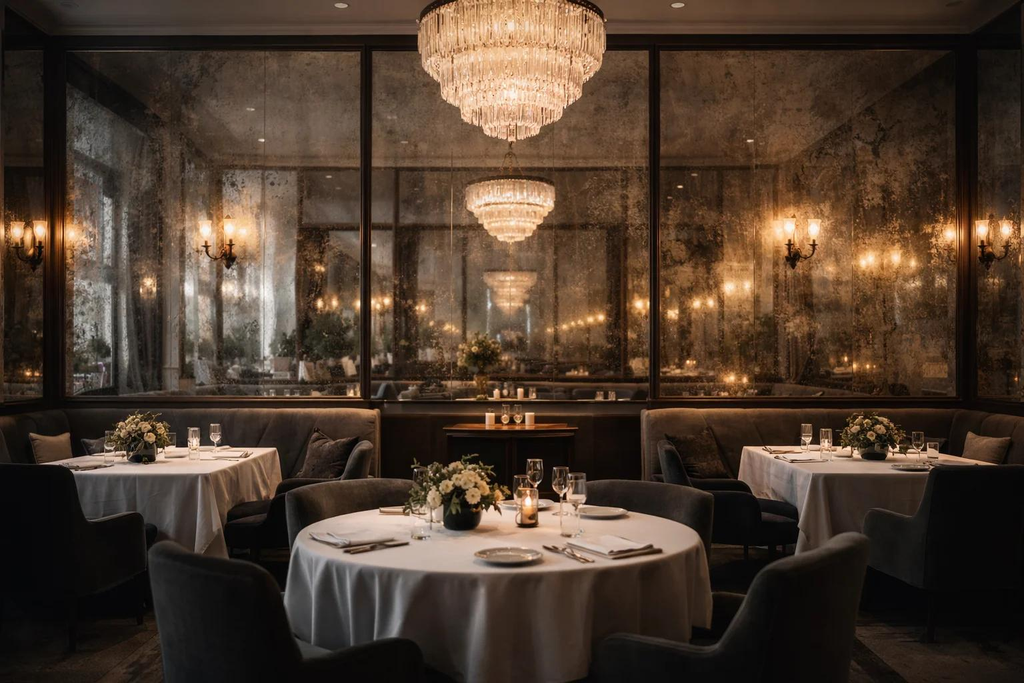
3. Why Do Antique Mirror Patterns Look Different From One Another?
This is an interesting point for anyone working with decorative mirror glass.
Two pieces of antique mirror carrying the same finish name may not look absolutely identical.
The reason is that the decorative effect is designed to create an aged appearance rather than a perfectly uniform reflective surface.
Depending on the manufacturing technique, the distribution of cloudy areas, spots, veining and tonal effects can vary between panels.
This becomes particularly important when working on large installations.
Imagine a contractor installing an antique mirror feature wall using several individual panels. If the panels are not reviewed and arranged carefully, the finished wall may have an unbalanced visual appearance.
A few practical recommendations:
- Request samples before approving a large order.
- Review all panels under similar lighting conditions.
- Check the pattern distribution before fabrication.
- Plan the panel layout before installation.
- Confirm whether a particular finish has directional characteristics.
- Discuss acceptable pattern variation with the supplier.
For professional glaziers, this is not simply a design consideration. It is part of project coordination and material quality control.
4. Fabrication Considerations: What Should Glass Professionals Know?
Antique mirror glass requires careful fabrication planning.
Although the front surface is glass, its decorative construction and rear protective layers make handling considerations particularly important.
Cutting and sizing
Accurate measurement should happen before cutting begins.
Professionals should confirm the required dimensions, finished edge specifications, hardware locations and installation tolerances.
More importantly, they should verify whether the selected antique mirror finish can undergo the proposed processing.
Edge finishing
Edge finishing is not merely about making the mirror look attractive.
The edges are particularly important because the reflective backing can be vulnerable where the protective coating terminates.
Depending on the product and installation method, edge grinding, polishing, beveling and appropriate edge protection may be required.
Any exposed backing should be handled according to the manufacturer’s recommendations.
Hole drilling and hardware cutouts
Drilling locations should be confirmed before fabrication.
Hardware positions, mounting points and cutouts must be planned carefully to avoid unnecessary reworking.
Glass professionals should also verify the manufacturer’s instructions regarding drilling, edge distances and the compatibility of the particular antique mirror finish with the proposed process.
Handling and storage
Never assume that the decorative appearance makes the glass more resistant to physical damage.
Use suitable glass-handling equipment, clean protective separators and appropriate storage arrangements.
Avoid dragging mirror panels across surfaces or allowing the rear coating to come into contact with abrasive materials.
Keep panels protected from moisture and avoid unnecessary contact with the reflective backing.
5. Why Does Antique Mirror Glass Sometimes Develop Black Edges or Dark Spots?
One of the issues mirror professionals frequently encounter is deterioration around mirror edges.
This can appear as dark patches, black spots, discoloured areas or a gradual loss of reflective appearance.
In conventional silvered mirrors, this is commonly associated with corrosion or degradation of the reflective coating.
Moisture, unsuitable chemicals, damaged protective coatings and prolonged exposure to humid conditions can contribute to the problem.
Edges deserve particular attention because they can provide a vulnerable route for moisture and contaminants to reach the reflective coating.
For antique mirrors, professionals should distinguish between two very different conditions:
Intentional distressing: The designed cloudy, dark or spotted appearance created during manufacturing.
Unwanted deterioration: Damage that develops because the reflective coating or its protective system has been compromised.
These should never be treated as the same thing.
If blackening or deterioration develops outside the intended decorative pattern, cleaning alone will not restore the damaged reflective layer.
The best approach is to investigate the cause, assess the backing condition and consult the manufacturer or an experienced mirror restoration professional.
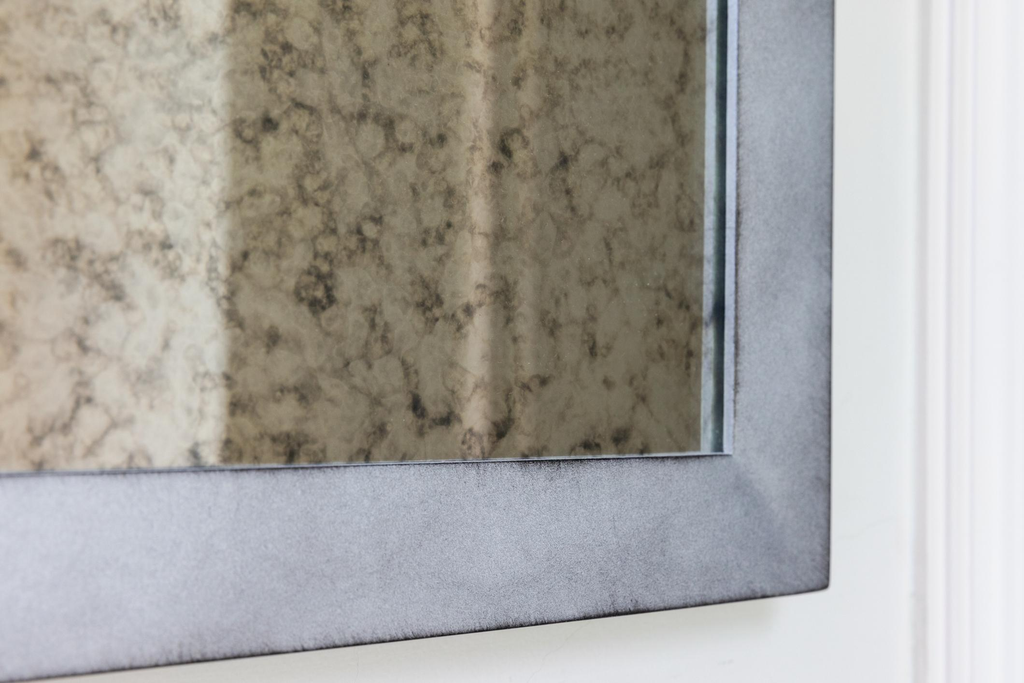
6. How to Maintain Antique Mirror Glass for Long-Term Performance
Proper maintenance is one of the most important factors in preserving antique mirror glass.
A mirror may be manufactured with a carefully protected reflective coating, but unsuitable cleaning practices and poor environmental conditions can gradually compromise its appearance.
The good news is that regular maintenance does not need to be complicated.
Clean the mirror with a soft microfiber cloth
Use a clean, soft microfiber cloth to remove dust and fingerprints from the glass surface.
Avoid rough cleaning pads, abrasive materials and excessive pressure.
The aim is to clean the glass without scratching its surface.
Apply cleaner to the cloth, not directly to the mirror
This is a particularly important practice for mirror maintenance.
Instead of spraying cleaning liquid directly onto the mirror, apply a small amount to a clean cloth.
Direct spraying can allow liquid to run towards the edges and potentially reach the rear reflective coating.
For long-term protection, the edges should remain as dry as possible.
Avoid aggressive cleaning chemicals
Do not automatically assume that every glass cleaner is suitable for every mirror.
Avoid abrasive cleaners, strong acids, alkalis, ammonia-based products and other aggressive chemicals unless the mirror manufacturer has specifically confirmed compatibility.
Use a mild, manufacturer-approved cleaning solution and test it on an inconspicuous area where appropriate.
Keep the edges dry
This deserves special attention.
Even when the front surface looks perfectly clean, moisture that enters the rear coating area can cause problems over time.
After cleaning, inspect the lower edges and corners.
If moisture is present, wipe it away immediately using a soft, dry cloth.
Control humidity and ventilation
Antique mirrors are generally best suited to interior applications where environmental conditions can be controlled.
Bathrooms, bars, kitchens and hospitality interiors may expose mirrors to humidity, steam and regular cleaning.
In these environments, good ventilation and appropriate installation detailing become particularly important.
Avoid prolonged exposure to moisture and direct steam. Where a mirror is specified near wet areas, confirm that the particular product is suitable for the application.
Avoid prolonged heat exposure
Do not install mirrors where they are exposed to excessive heat or unsuitable temperature conditions.
Heat sources, poorly ventilated spaces and abrupt environmental changes should be considered during project planning.
Always follow the product manufacturer’s installation recommendations.
Inspect the mirror periodically
For commercial installations, regular visual inspection can help identify early signs of deterioration.
Pay particular attention to:
- Lower edges and corners.
- Areas close to sinks and water sources.
- Joints between mirror panels.
- Areas around drilled holes and hardware.
- Locations where moisture may collect.
- Any visible changes in the reflective backing.
Early identification allows professionals to investigate the cause before the problem becomes more extensive.
7. Installation Decisions That Can Influence Mirror Longevity
Maintenance does not begin after the installation is complete. It starts with the decisions made during installation planning.
A beautifully manufactured antique mirror can still experience premature deterioration if it is installed incorrectly.
Here are some important considerations for glass contractors and installers.
Wall preparation: The mounting surface should be clean, dry, stable and suitable for the selected installation system.
Adhesive compatibility: Not every mirror adhesive is suitable for every mirror backing. Use an adhesive specifically approved by the mirror manufacturer and follow the adhesive supplier’s application instructions.
Mechanical support: Depending on panel dimensions, weight and installation location, suitable mechanical support may be required.
Edge protection: Where the backing is exposed, appropriate protection should be considered according to the manufacturer’s recommendations.
Ventilation: Allow suitable ventilation behind the mirror where the specified mounting system requires it. Avoid trapping moisture behind the panels.
Panel alignment: Accurate alignment and suitable joint spacing help prevent unnecessary stress and improve the overall appearance.
Safety considerations: Where required by the application, discuss safety backing, appropriate glass treatment and applicable building-code requirements before fabrication.
For commercial projects, these decisions should be made before the glass reaches the installation site.
8. What Should Fabricators Check Before Delivering an Antique Mirror Project?
A final inspection can prevent avoidable problems and improve customer satisfaction.
Before dispatch, glass professionals should review the finished panels against the approved specifications.
A practical checklist includes:
- Confirm the glass dimensions and thickness.
- Verify the selected antique finish and colour.
- Review the decorative pattern distribution.
- Inspect the front surface for scratches and damage.
- Check edges, corners, holes and cutouts.
- Examine the condition of the rear protective coating.
- Confirm the specified safety backing or other safety provisions.
- Ensure the panels are properly protected for transportation.
- Provide suitable cleaning and maintenance instructions.
For larger projects, it is also useful to retain approved samples and installation drawings for future reference.
This creates a better reference point if replacement panels or additional matching materials are required later.
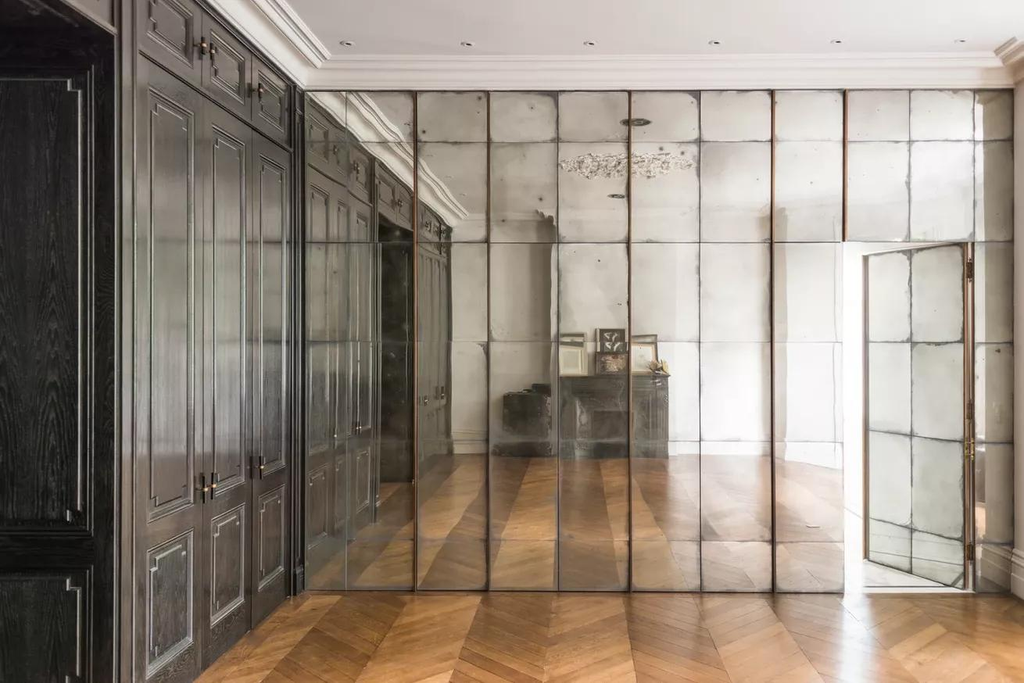
9. The Real Secret to Long-Lasting Antique Mirrors
Antique mirror glass is a combination of visual design and technical craftsmanship.
Its aged appearance may attract attention, but its long-term performance depends on much more than the decorative finish.
The quality of the base glass, reflective coating, protective layers, fabrication process, storage conditions and installation method all contribute to the finished result.
For glass professionals, understanding these details makes it easier to select the right material, avoid processing mistakes and provide better guidance to customers.
At Bear Glass, we understand that every decorative mirror project has its own requirements. From selecting the right finish to planning custom fabrication, attention to detail makes a difference.
Whether the project involves a residential feature wall, a hotel interior, a restaurant bar or a custom decorative installation, the right material and fabrication approach help bring the design together.
Explore the Bear Glass antique mirror collection and discover the possibilities of decorative mirror glass.
Visit: https://www.bearglass.com/antique-mirror.php
For more details, we suggest you to call 718-832-3604 or email sales@bearglass.com