Architecture is not just about choosing materials that look beautiful. It is about understanding how those materials interact with light, space, privacy and the people who use a building.
Consider a modern office with glass partitions. The objective may be to maintain an open atmosphere while creating separate spaces for meetings and focused work. Or consider a residential interior where natural light is important, but complete visibility between rooms is not always desirable.
These design challenges make material selection an important part of architectural planning.
Patterned glass offers an interesting approach. With its decorative surface textures and varying degrees of visual obscuration, it can introduce character into an interior while helping architects balance light, privacy and visual separation.
From contemporary residential spaces to commercial interiors, patterned glass has applications that go far beyond decoration. When selected carefully, it can become an important element of the overall architectural design.
1. Patterned Glass Is More Than a Decorative Surface
Patterned glass, also known as textured or decorative glass, features a design impressed into one or more surfaces of the glass. Traditional patterned glass is commonly manufactured through a rolling process in which hot, malleable glass passes between specially designed rollers. An engraved roller creates the decorative pattern on the glass surface.
The result is a glass product with a distinctive texture that changes how people see objects and light passing through it.
Unlike ordinary clear glass, which generally provides an unobstructed view, patterned glass introduces varying degrees of visual distortion. Depending on the design, it can soften direct views, diffuse transmitted light and add a decorative quality to otherwise simple spaces.
Its visual character depends on several factors, including:
- Pattern geometry and surface texture.
- Depth and arrangement of the design.
- Glass thickness and product specifications.
- Lighting conditions and viewing angles.
- The surrounding materials and interior finishes.
Some patterned glass products feature a decorative surface on one side and a relatively smooth surface on the other. However, surface finishes vary according to the manufacturing process and individual product design.
For architects, this means patterned glass should not be considered just another decorative finish. It is a material that can influence the visual experience of an interior.
2. The Relationship Between Patterned Glass and Natural Light
Natural light plays an important role in architectural design. It influences how colours appear, how materials are perceived and how comfortable an interior feels.
However, not every space requires completely unobstructed transparency.
A clear glass partition may allow people to see directly from one room into another. While this can create an open appearance, it may not always be suitable for spaces where visual privacy is important.
Patterned glass offers another possibility.
Its textured surface can diffuse transmitted light and distort direct views, depending on the selected pattern. This allows designers to introduce visual separation without necessarily creating a completely opaque barrier.
How different textures influence light
Different surface patterns interact with light in different ways.
Linear textures, for example, create directional visual effects. More irregular or decorative patterns can produce a less uniform appearance. Some textures create subtle visual distortion, while others obscure objects more noticeably.
The final effect depends on the specific glass design and the lighting environment.
Architects should also consider the position of the glass in relation to windows, artificial lighting and surrounding surfaces. A pattern that looks subtle under one lighting condition may appear more pronounced under another.
The objective is not simply to allow light into a room. It is to understand how light will behave within the space.
3. Privacy Without Completely Closing the Space
Privacy is one of the most practical reasons architects and interior designers consider decorative glass.
Traditional solid partitions provide separation, but they can also make an interior feel more enclosed. Clear glass maintains visual openness, but it may not offer the level of privacy required.
Patterned glass provides a middle ground.
Depending on its texture and application, it can obscure direct views while maintaining light transmission. This makes it worth considering for several architectural applications.
Office meeting rooms
Meeting rooms often require a degree of visual privacy without making the surrounding office feel disconnected.
Patterned glass partitions can help define meeting spaces while retaining some of the openness associated with glass interiors.
Residential partitions
In homes, patterned glass can be used to distinguish living areas, create decorative screens or introduce separation between selected spaces.
It can be particularly interesting where designers want to maintain a connection between rooms without creating completely open sightlines.
Bathroom windows and partitions
Bathrooms are another application where privacy matters. Depending on the pattern and installation, textured glass can be considered for windows and suitable partition systems.
The selected product must provide the required level of privacy and meet the relevant safety-glazing requirements.
Wardrobes and display cabinets
Patterned glass can also introduce visual interest into cabinetry. It can soften the appearance of stored objects while giving wardrobe doors, kitchen cabinets and display units a distinctive finish.
An important consideration: Patterned glass does not automatically provide complete privacy. Its obscuration level depends on the particular pattern, viewing distance, lighting conditions and direction of observation. The intended application should always guide product selection.
4. How Different Glass Patterns Influence Interior Design
One of the most interesting aspects of patterned glass is the variety of visual effects that different textures can create.
Architects do not select a pattern simply because it looks attractive in a sample. They consider how its lines, shapes and surface details will interact with the rest of the interior.
Reeded and ribbed glass
Reeded or ribbed glass features repeated linear textures. Its structured appearance makes it a popular design consideration for contemporary interiors.
It can be used in cabinet doors, room dividers, decorative screens and selected door applications.
The direction and spacing of the ribs can influence the visual rhythm of the installation. Vertical patterns, for example, create a different impression from horizontal arrangements.
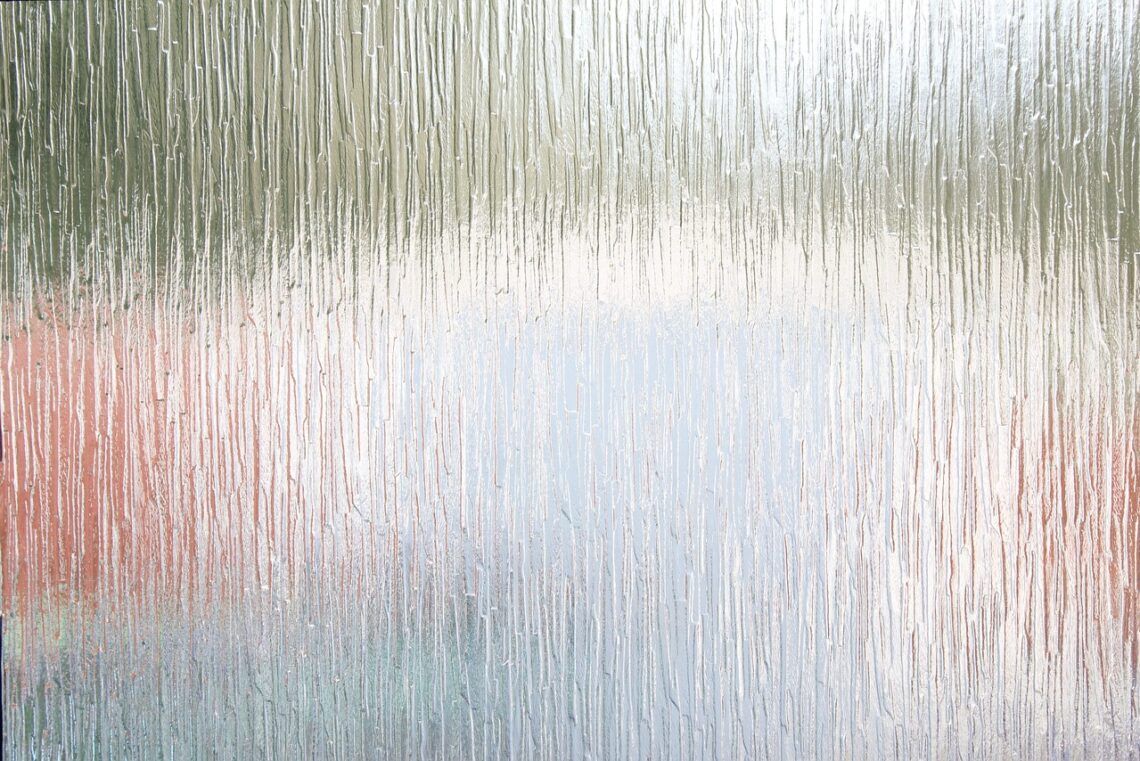
Rain-patterned glass
Rain-inspired textures feature irregular, flowing surface details that create a distinctive decorative appearance.
They can be considered for windows, interior partitions and decorative panels where a softer, less geometric texture is preferred.
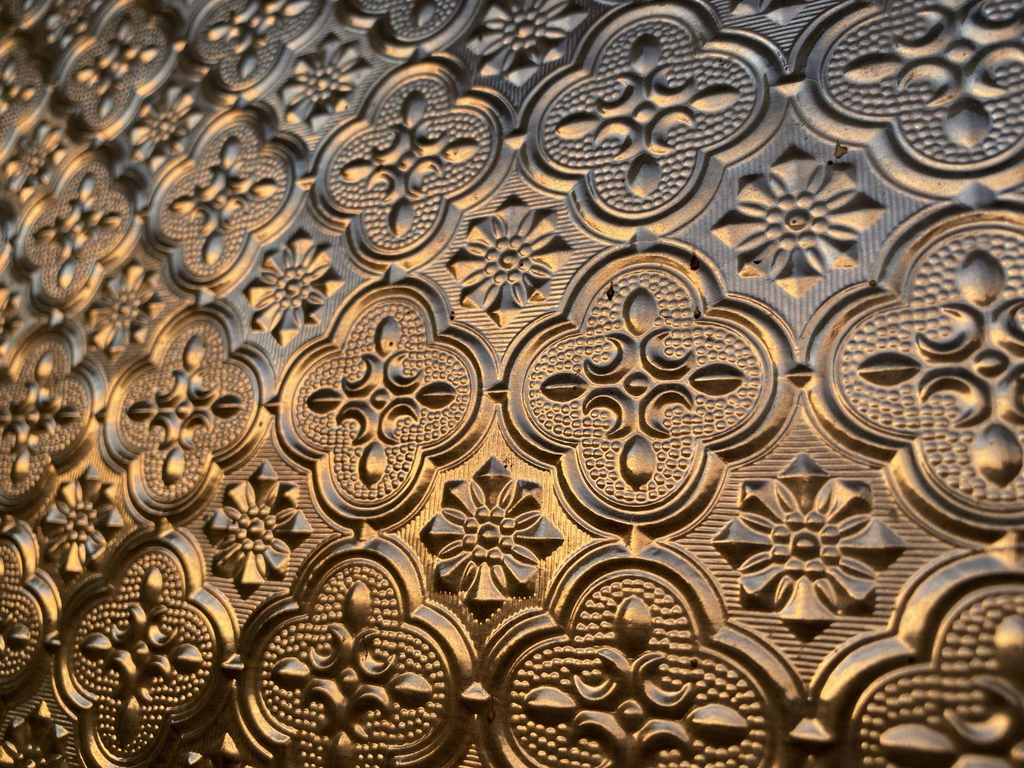
Geometric patterned glass
Geometric designs introduce repetition, structure and visual consistency.
Depending on the pattern, they can complement modern interiors, decorative doors, cabinet panels and architectural glazing features.
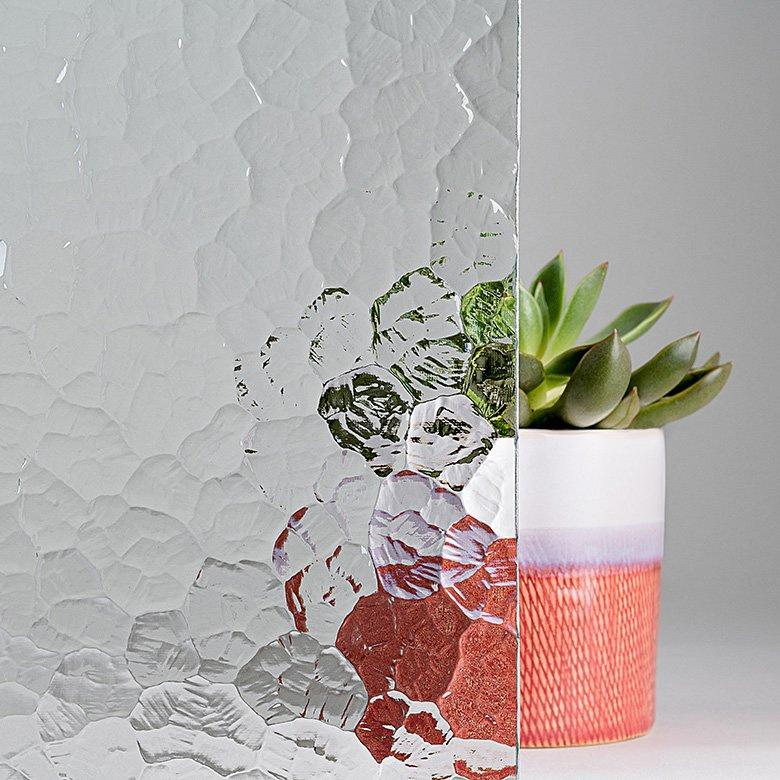
Chinchilla-style patterned glass
Chinchilla-style textures feature irregular decorative details that create a distinctive visual effect.
They can be considered for cabinetry, decorative partitions and other interior applications where a more pronounced surface pattern is desired.
Other decorative textures
Patterns such as Flemish, Aqualite, Sahara, Taffeta and other ornamental designs provide additional options for architects and interior designers.
Each design creates a different visual character. The right selection depends on the intended appearance, privacy requirements and compatibility with the overall project.
At Bear Glass, a range of patterned-glass designs provides architects, designers and contractors with different decorative possibilities. The available patterns, sizes and specifications should be confirmed for each project.
5. Patterned Glass in Different Architectural Spaces
Patterned glass can contribute to several types of interiors. Its application is not limited to windows or traditional decorative panels.
The most successful designs are those in which the glass texture supports the purpose of the space.
Residential architecture
Residential interiors offer many opportunities for decorative glass.
Patterned glass can be considered for:
- Kitchen cabinet doors.
- Wardrobe and storage panels.
- Living-room partitions.
- Decorative interior doors.
- Bathroom windows.
- Display cabinets and shelving.
For example, a kitchen with natural wood cabinetry may benefit from the contrast created by textured glass panels. The glass introduces another material quality without requiring an additional strong colour or decorative finish.
Commercial architecture
In commercial spaces, patterned glass can help create visual separation while maintaining a connection between different areas.
Potential applications include:
- Office meeting-room partitions.
- Reception areas.
- Internal decorative screens.
- Retail display units.
- Hospitality interiors.
In an office, for example, patterned glass may help distinguish a meeting area from an open workspace without relying entirely on solid construction.
Hospitality and restaurant design
Hotels, restaurants and hospitality environments often require materials that combine visual appeal with practical functionality.
Patterned glass can be considered for decorative screens, selected partitions, display cabinetry and interior doors.
Its texture can complement materials such as timber, stone and metal, helping designers create a more layered interior.
Interior detailing and furniture
Patterned glass can also become part of the furniture itself.
Cabinet fronts, display units, decorative panels and selected furniture components can use textured glass to introduce a different surface quality.
This is particularly useful in designs where the objective is to create visual interest through materials rather than relying entirely on colour or ornamentation.
6. What Architects Should Consider Before Specifying Patterned Glass
Choosing the right patterned glass involves more than selecting a texture from a sample catalogue.
Architects, designers, fabricators and installers should consider the technical requirements of the complete installation before specifying the material.
1. Pattern selection
The selected texture should complement the architectural style and surrounding materials.
A highly pronounced pattern may become a dominant visual feature, while a subtle texture may integrate more quietly into the interior.
2. Privacy requirements
Consider how much visual obscuration the project actually requires.
A decorative pattern suitable for a cabinet door may not necessarily provide sufficient privacy for a bathroom or meeting room.
Where privacy is critical, evaluate the actual product under representative lighting and viewing conditions.
3. Glass thickness and dimensions
Glass thickness and available dimensions vary according to the product and manufacturer.
The selected thickness must be suitable for the intended installation, support system and applicable safety requirements.
4. Pattern orientation
Pattern direction is an important design and fabrication consideration.
A vertical linear pattern may create a different visual effect from a horizontal one. Architects should communicate the intended orientation clearly before fabrication begins.
5. Safety glazing requirements
Not every decorative glass product is automatically suitable for every safety-glazing application.
Where tempered or laminated glass is required, confirm that the specific patterned glass product is compatible with the proposed processing method.
6. Fabrication compatibility
Glass fabrication requirements should be discussed before production.
Cutting, drilling, edge finishing and other required operations must be planned according to the selected product and its processing limitations.
For fully tempered glass, cutting and drilling must be completed before the heat-treatment process.
7. Installation and hardware
The final installation should account for framing, support, fixing methods, hardware and the surrounding construction.
A well-selected glass pattern still needs an appropriate installation system to achieve the intended result.
For architects and contractors, early coordination with the glass fabricator can help prevent specification conflicts, unnecessary fabrication changes and installation difficulties.
7. Common Mistakes When Choosing Patterned Glass
Patterned glass offers many design possibilities, but selecting the wrong product can affect both appearance and functionality.
Here are some common mistakes worth avoiding.
Choosing a pattern based only on appearance
A pattern may look attractive in a small sample but produce a very different visual effect across a large installation. Always consider the overall dimensions and viewing conditions.
Assuming every pattern provides the same privacy
Different textures create different levels of visual obscuration. Never assume that all patterned glass products offer complete concealment.
Ignoring lighting conditions
The appearance of patterned glass can change depending on the direction and intensity of light. Consider both daytime and artificial lighting.
Overlooking pattern orientation
This is particularly important with linear designs. Incorrect orientation can affect the appearance of the finished installation.
Assuming every patterned glass product can be tempered or laminated
Processing compatibility varies. Confirm the product’s technical specifications before finalising the design.
Not considering maintenance
Some surface textures may require more attention during cleaning than smooth glass. Consider accessibility, cleaning methods and the intended location before selecting a pattern.
8. The Role of Textured Glass in Modern Interior Architecture
Modern architecture increasingly gives attention to the relationship between materials, light and the overall experience of a space.
Glass is no longer viewed only as a transparent building material. Its surface, colour, texture and finish can all contribute to the character of an interior.
Patterned glass offers architects another way to explore this relationship.
It can introduce texture into minimalist spaces, soften direct views between rooms, complement natural materials and create decorative features without relying on heavy visual elements.
Its versatility also allows designers to approach different projects with different priorities. A residential wardrobe may require a subtle decorative finish, while an office partition may need a more pronounced pattern to provide visual separation.
The important point is that patterned glass should be selected according to the design objective, not simply because a particular texture is currently popular.
As architectural materials continue to offer more decorative possibilities, textured glass remains an interesting option for projects where aesthetics and functionality need to work together.
Frequently Asked Questions About Patterned Glass
1. What is patterned glass used for in modern architecture?
Patterned glass is used in interior partitions, windows, cabinet doors, wardrobes, decorative screens, furniture and other architectural applications. It provides surface texture and can offer varying degrees of visual privacy while allowing light to pass through.
2. Does patterned glass provide privacy while allowing natural light?
Yes. Many patterned glass products diffuse transmitted light and obscure direct views. However, the privacy level depends on the pattern, lighting conditions and viewing angle.
3. What is the difference between patterned glass and frosted glass?
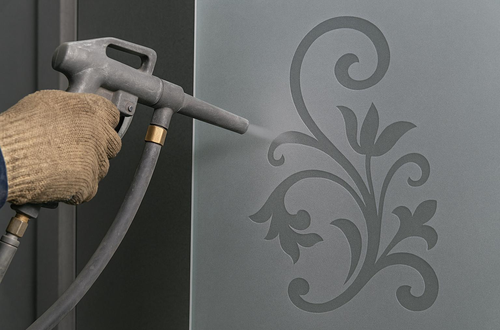
Patterned glass features a decorative surface texture, usually created through a rolling process. Frosted or acid-etched glass has a surface treatment that creates a translucent appearance. Both can provide visual privacy, but their textures and visual effects differ.
4. Can patterned glass be used for interior partitions?
Yes. Patterned glass can be used in suitable interior partition systems to introduce visual separation while maintaining light transmission. The selected product must meet the project’s structural and safety requirements.
5. Can patterned glass be used in kitchen cabinets?
Yes. Patterned glass can be incorporated into suitable cabinet doors and display units. The choice of pattern depends on the desired decorative effect and the visibility of the contents.
6. Can patterned glass be tempered?
Some patterned glass products can be tempered, but compatibility depends on the specific product, pattern, thickness and manufacturer’s recommendations.
7. Can patterned glass be laminated?
Certain patterned glass products are compatible with lamination. Product suitability and the required safety performance should be confirmed before specification.
8. How do architects choose the right patterned glass?
Architects should consider the design style, desired privacy, light transmission, pattern orientation, glass thickness, safety requirements, fabrication compatibility and installation method.
9. Does patterned glass have different textures on both sides?
Some products have a patterned surface on one side and a relatively smooth surface on the other. However, this depends on the manufacturing process and the particular product.
10. Is patterned glass suitable for commercial interiors?
Yes. It can be considered for office partitions, meeting rooms, reception areas, retail displays and hospitality interiors, provided the selected product meets the project’s functional and safety requirements.
Explore Patterned Glass Possibilities with Bear Glass
Good architectural design often comes down to the thoughtful selection of materials.
The right glass finish can influence how light moves through a space, how much privacy an interior provides and how different materials work together.
At Bear Glass, we offer a range of glass and mirror solutions for architectural, commercial and residential applications. Our patterned-glass range provides different textures and decorative possibilities for projects that require something beyond conventional clear glass.
Whether you are an architect developing an interior concept, a contractor coordinating a glazing project or a designer exploring decorative glass finishes, selecting the right product begins with understanding the requirements of the space.
Explore our Patterned Glass Collection and discover how decorative glass can contribute to your next project.
Bear Glass – Bringing glass design and fabrication possibilities together.